Best Motorbike Boots in Kenya 2025: Racing, Trail & Daily Commute Boots Compared
Why Your Motorbike Boots Matter More Than You Think
Riding a motorbike in Kenya—whether you're navigating Nairobi's bustling traffic, tackling the Rift Valley's off-road terrain, or cruising on the highway—demands gear that protects. Yet many riders overlook one of the most critical pieces of safety equipment: their boots.
Your feet and ankles face the most exposure on a motorbike. A slip on the footpegs at a traffic light, a skid on a murram road, or worse—a collision—and inadequate footwear can mean serious injury. The right motorbike boots aren't just about comfort; they're about survival.
This comprehensive guide explores every type of motorcycle boot Kenya riders need, from high-performance racing boots stocked at Cycle Importers to waterproof rain boots for the monsoon seasons. Whether you're a daily commuter, weekend adventurer, or professional delivery rider, we'll help you find the perfect pair.
The 4 Types of Motorbike Boots Kenya Riders Need to Know
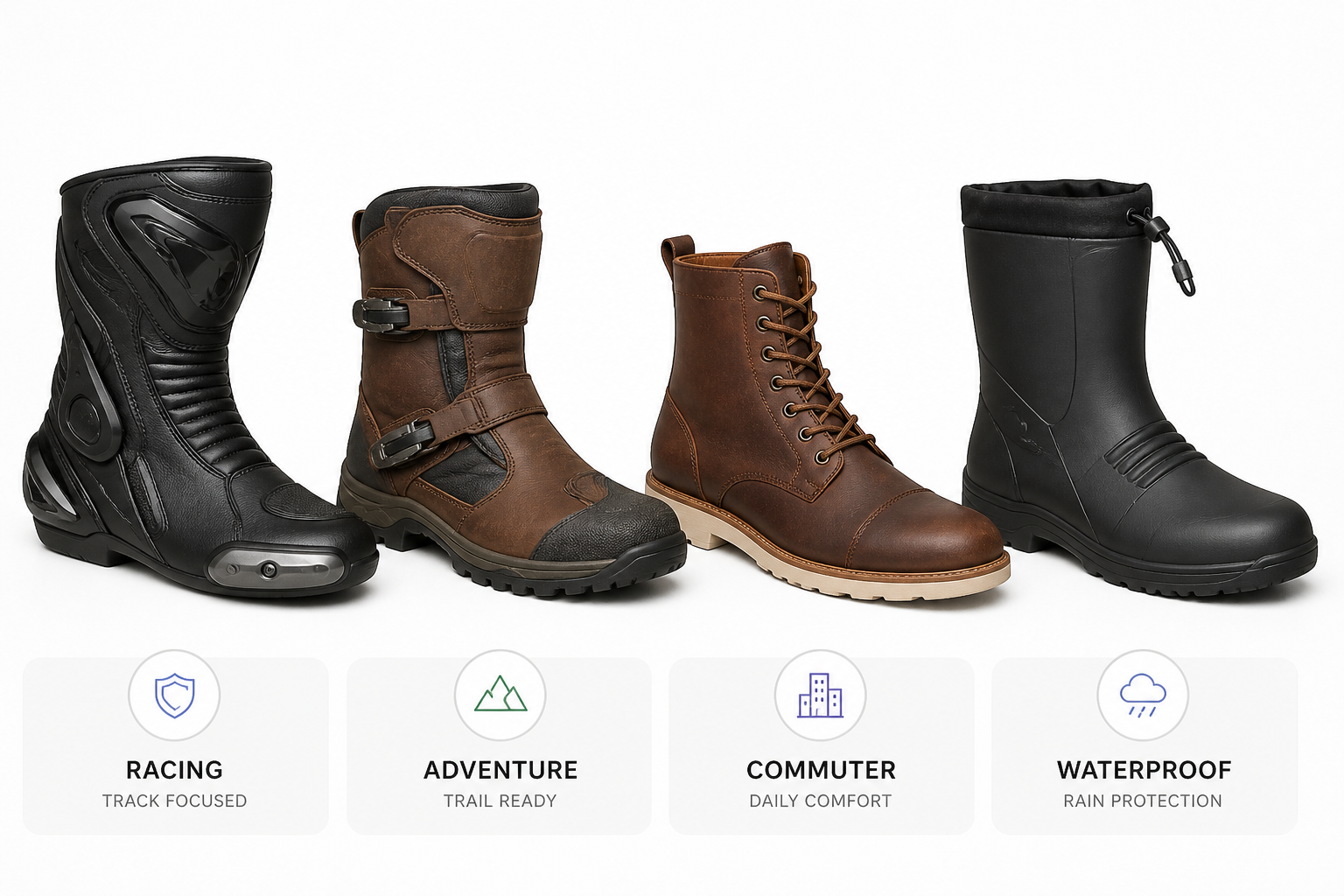
Each boot type serves different riding styles and Kenya road conditions
1. Racing/Sport Boots – Peak Protection & Performance
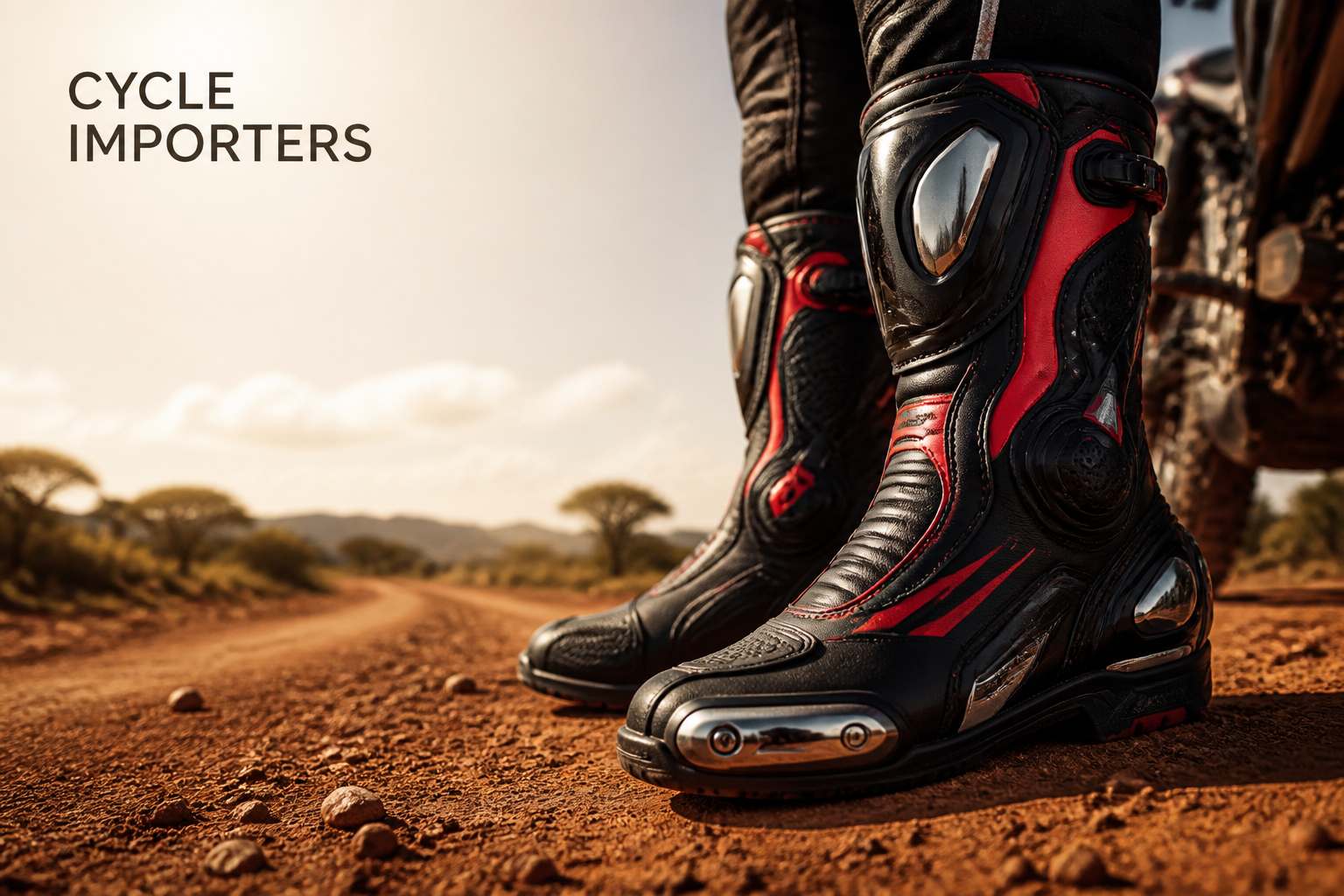
Racing boots are engineered for speed and maximum ankle protection. Built for riders who prioritize performance, these boots feature reinforced toe caps, ankle armor, and slip-resistant soles designed to grip footpegs securely during aggressive cornering.
- Ankle Protection: Reinforced padding and rigid ankle guards prevent twisting injuries on tight turns
- Toe Cap Reinforcement: Extra material around the toes withstands gear shifts and foot contact with the asphalt
- Slip-Resistant Sole: Specialized rubber grip keeps feet planted on footpegs at speed
- Material: Premium leather or synthetic leather with waterproof treatment
- Closure: Double-sided zippers allow quick on-off access
- CE Rating: Most racing boots meet EN 13634:2017 safety standards
Best for: Weekend track riders, sport bike enthusiasts, riders who demand maximum protection on Nairobi's winding roads.
Cycle Importers stocks premium racing boots in Kenya. We carry leather and synthetic options with full ankle protection, reinforced soles, and reflective safety features.
📱 Order Racing Boots on WhatsApp 📞 Call for Sizing Help2. Adventure/Trail Boots – Versatility for Rough Terrain
Adventure boots split the difference between protection and comfort. They're taller than commuter boots to protect your shins during off-road riding, yet more flexible than racing boots for walking around campsites or rest stops.
- Shin Protection: Extended height covers the shin area against brush and obstacles
- Moderate Ankle Support: Adequate ankle protection without extreme rigidity
- Aggressive Tread: Designed for murram roads and farm tracks common in rural Kenya
- Waterproof Membrane: Handles light rain and water crossings
- Durability: Built to withstand rough conditions and multiple gear sets
Best for: Rift Valley explorers, weekend trail riders, delivery personnel working off-road routes.
3. Urban/Commuter Boots – Comfort for Daily Riding
Commuter boots prioritize comfort without sacrificing essential protection. They look closer to regular shoes than racing boots, making them perfect for riders who switch between bike and sidewalk multiple times daily.
- Stylish Design: Can blend into casual or professional dress codes
- Basic Ankle Support: Sufficient protection for city speeds and regular routes
- Comfortable Padding: All-day wearability without foot fatigue
- Flexible Sole: Better for walking between destinations
- Moderate Grip: Adequate traction for daily Nairobi commutes
Best for: Daily Nairobi commuters, delivery riders, professional couriers, students traveling to campus.
4. Waterproof Rain Boots – Essential for Kenya's Wet Seasons
Kenya experiences two rainy seasons—long rains (March to May) and short rains (November to December). Waterproof boots keep your feet dry and maintain grip on slick roads when traditional boots would become slippery hazards.
- Full Waterproof Sealing: Sealed seams prevent water penetration at zippers and stitching
- Water-Resistant Sole: Maintains traction on wet tarmac and muddy trails
- Quick-Dry Lining: Moisture-wicking inner material reduces water absorption
- Drainage Vents: Strategic channels prevent water pooling inside the boot
- Reflective Strips: Increased visibility in rainy, low-light conditions
Best for: Rainy season riders, any Kenya cyclist exposed to the monsoons, riders in high-rainfall zones (Coast, Western, Nyanza regions).
What Makes a Great Motorbike Boot? The Technical Breakdown
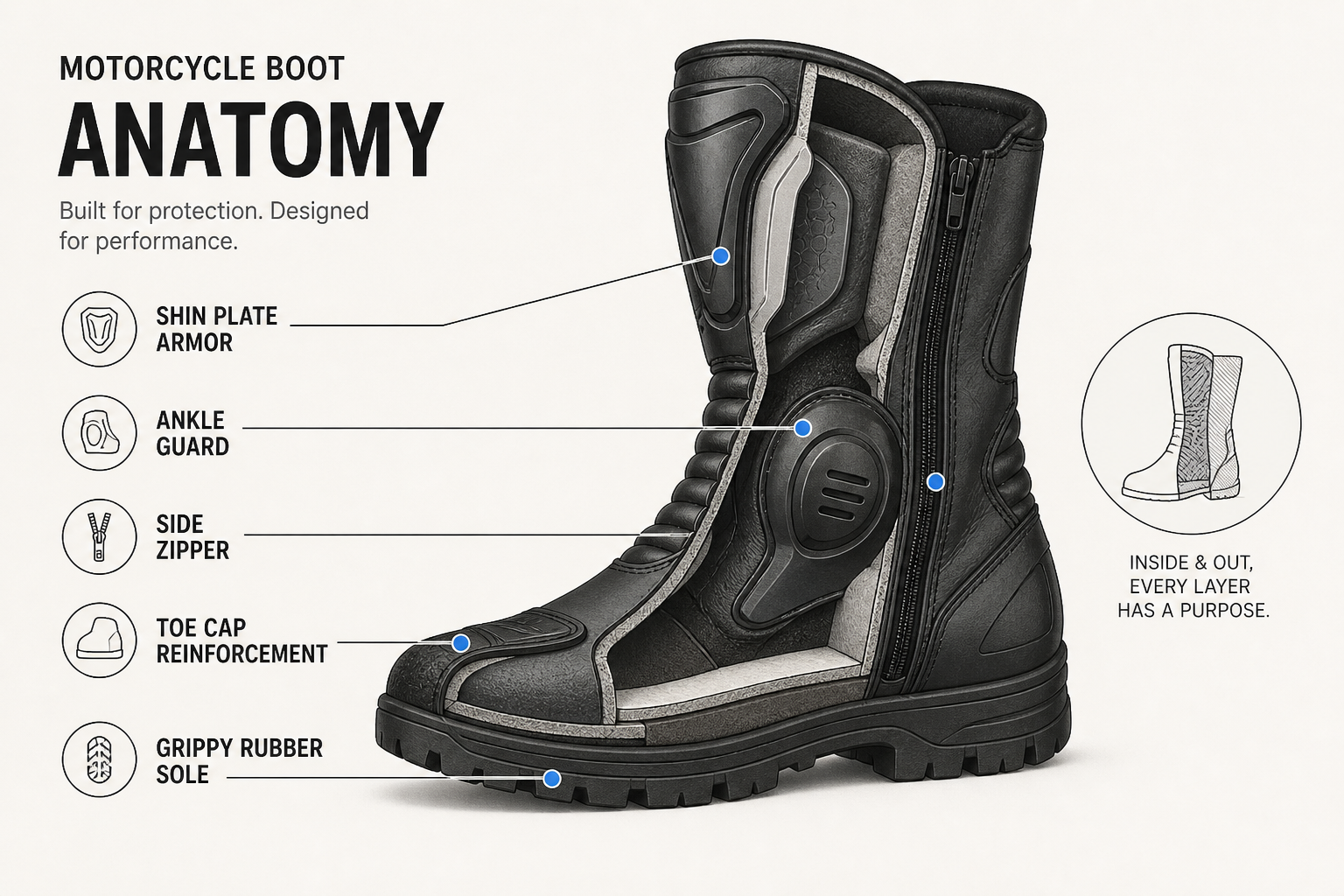
Understanding boot construction helps you choose the right protection for your riding style
1. Ankle Protection & Articulation
Your ankle bears enormous stress during riding. A good motorbike boot should have:
- Rigid outer shell reinforcement on both sides of the ankle
- Internal padding that molds to your foot without restricting movement
- Support that prevents inversion (rolling inward) but allows forward/backward motion
- Height extending 2-3 inches above your ankle joint
2. Sole Grip & Footpeg Feel
Your soles are your only contact with the footpegs. They must:
- Feature Oil-resistant rubber (motorcycle engines leak; your sole must resist slipping)
- Have aggressive tread patterns for purchase on metal pegs
- Avoid over-thick cushioning that reduces footpeg feel and precision
- Provide enough texture for walking without being razor-sharp
3. Waterproofing & Breathability Balance
Waterproof doesn't mean sealed-tight (you'll get sweaty feet). Instead, look for:
- Waterproof membrane that allows vapor to escape (Gore-Tex equivalent)
- Sealed seams at zippers and stitching lines
- Quick-dry linings that shed water faster than cotton or suede
- Strategic ventilation for long rides in warm weather
4. CE Rating & Safety Standards
CE EN 13634:2017 is the European standard for motorcycle footwear. When boots meet this standard, they've been tested for:
- Transverse rigidity (preventing twisting injuries)
- Impact absorption at the heel and ankle
- Abrasion resistance (how long they last under friction)
- Oil and gasoline resistance
Always ask if your boots have CE certification. It's the only independent proof of safety standards.
Racing Boots at Cycle Importers: What You Get
Cycle Importers racing boots deliver track-quality protection for Kenya's roads
Our racing boots are engineered for riders who demand maximum protection on Kenya's challenging roads. Here's what makes our stock stand out:
- Premium Leather/Synthetic Construction: Durable materials withstand heat, weather, and years of riding
- Reinforced Ankle Guards: Full-coverage ankle armor protects against inversion injuries
- Toe Cap Protection: Reinforced toes prevent shifting injuries and asphalt abrasion
- Slip-Resistant Soles: Oil-resistant rubber with aggressive tread for secure footpeg grip
- Waterproof Sealing: Treated seams handle Kenya's rainy seasons
- Reflective Safety Elements: Strips on heels and sides increase visibility in traffic
- Double-Sided Zippers: Easy on/off without taking off your helmet
- All-Day Comfort Padding: Unlike racing-only boots, ours are wearable for commuting too
Ready to upgrade your riding safety?
📱 Order Boots on WhatsApp: +254720283468 🔗 View Our Racing Boot CollectionIf we don't have your exact size or preference in stock, we can arrange custom orders through our quote system. Contact us with your requirements.
Choosing Boots for Kenya's Road Conditions
Nairobi City Riding: Asphalt, Traffic & Speed
Road Type: Smooth tarmac with frequent stops, heavy traffic, variable speed zones.
Best Boot Choice: Racing or Sport boots for frequent speed changes; Commuter boots for daily courier work.
- Prioritize ankle protection for aggressive lane changes and emergency stops
- Choose boots with good oil resistance (you'll encounter many engine leaks at traffic lights)
- Waterproof treatment is essential; Nairobi's sporadic showers can catch you mid-ride
- Double-sided zippers let you adjust quickly in stop-and-go traffic
Off-Road/Murram Roads: Rift Valley & Rural Areas
Road Type: Unpaved, corrugated tracks; potential water crossings; uneven terrain.
Best Boot Choice: Adventure/Trail boots with shin protection and aggressive tread.
- Expect your boots to get coated in red dust; choose materials that brush clean (leather over canvas)
- Higher boots protect shins from brush and rocks thrown up by wheels
- Waterproof lining prevents mud from becoming a sloppy mess inside your boots
- Aggressive tread is vital—murram loses traction fast
Long Highway Rides: Consistent Speed & Distance
Road Type: Sustained tarmac rides on the Nairobi–Mombasa, Nairobi–Kisumu, or Nairobi–Nakuru highways.
Best Boot Choice: Comfort-focused Racing boots or Adventure boots with flexible soles.
- Cushioning matters more on long rides; your foot will thank you
- Ventilation prevents sweat buildup and blistering over 200+ km
- Waterproof sealing is critical—afternoon storms are common on Kenya highways
- Reflective strips increase visibility to other traffic on long, low-light rides
Rainy Season Riding: March–May & November–December
Road Type: Wet tarmac; reduced visibility; increased slipping hazards.
Best Boot Choice: Dedicated waterproof rain boots or upgraded waterproof racing boots.
- Full waterproof sealing (Gore-Tex or equivalent) is non-negotiable
- Water-resistant soles maintain traction on slick surfaces
- Quick-dry linings prevent fungal infections from moisture-trapped feet
- Reflective elements are critical in rainy, low-visibility conditions
- Consider a second pair so one can dry while you ride the other
How to Find Your Boot Size: Complete Guide for Kenyan Buyers
Motorbike boots fit differently than regular shoes. They're built snug to prevent your foot from sliding on the footpeg, but not so tight that circulation is cut off. Here's how to size correctly:
Step 1: Measure Your Feet at Home
- Measure in the evening when feet are slightly swollen (they swell after riding)
- Wear the socks you'll ride in
- Measure from heel to longest toe in both centimeters and inches
- Measure both feet—one may be slightly larger
Step 2: Convert to International Sizes
Kenya uses multiple sizing systems. Here's a conversion guide:
| US Size | EU Size | UK Size | Foot Length (cm) |
|---|---|---|---|
| 6 | 38-39 | 5-5.5 | 23-24 |
| 7 | 39-40 | 6-6.5 | 24-25 |
| 8 | 40-41 | 7-7.5 | 25-26 |
| 9 | 41-42 | 8-8.5 | 26-27 |
| 10 | 42-43 | 9-9.5 | 27-28 |
| 11 | 43-44 | 10-10.5 | 28-29 |
| 12 | 44-45 | 11-11.5 | 29-30 |
| 13 | 45-46 | 12-12.5 | 30-31 |
Step 3: Account for Motorbike Boot Fit
- Length: You should have about a thumb's width of space between your longest toe and the boot's toe cap. Racing boots fit snugger; commuter boots fit closer to regular shoes.
- Width: The boot should feel snug around your midfoot but not restrict circulation. Your little toe and pinky should have room to wiggle slightly.
- Ankle: Racing boots should feel rigid and supportive; you shouldn't be able to flex your ankle much. Commuter and adventure boots allow more movement.
- Heel: Your heel should not slip when walking. A small slip is okay during the break-in period, but if your heel moves more than 1-2cm, the boot is too large.
Step 4: Order or Visit a Fitter
Remote Ordering from Cycle Importers:
- Use the sizing conversion table above
- Message us on WhatsApp with your foot measurement in centimeters and your preferred boot type
- We'll confirm availability and sizing before you pay
- If exact size isn't available, we offer custom quotes
Need help finding your size? Our team can guide you through the process.
📱 WhatsApp Sizing Help: +254720283468 📞 Call Our Experts: +254720283468How to Care for Your Riding Boots in Kenya
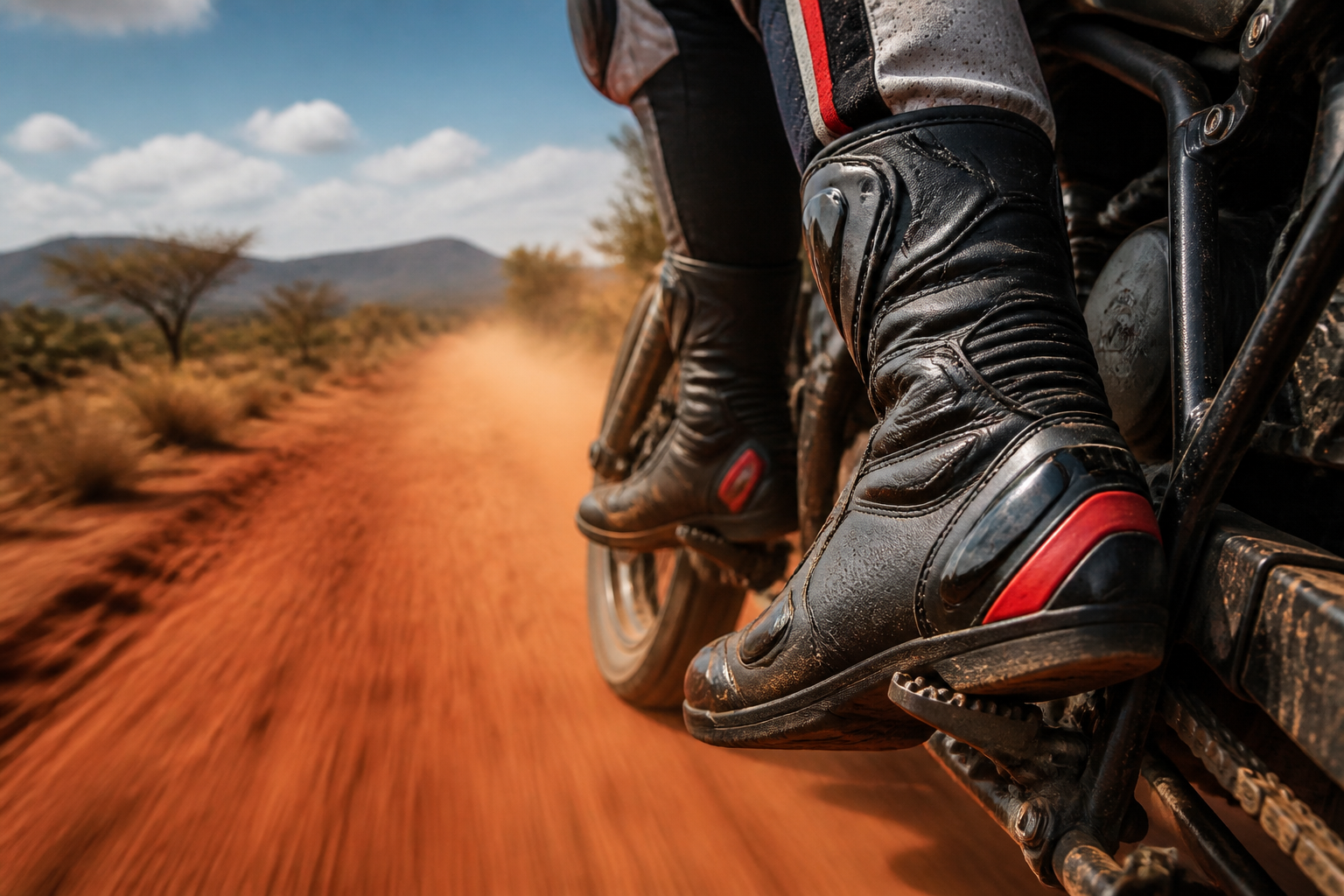
Well-maintained boots last for years and provide consistent protection
Kenya's dust, humidity, and varied terrain demand a boot maintenance routine. Proper care extends the life of your boots from 2-3 years to 5-7 years.
After Every Ride
- Wipe down: Use a dry cloth to remove dust and mud before it dries and hardens
- Air dry: Remove insoles if possible and let boots breathe in open air (not direct sunlight)
- Deodorize: Sprinkle baking soda inside or use boot freshener to prevent odor in Kenya's humidity
Weekly Maintenance
- Deep clean: Use a soft brush to remove dried mud from the sole and upper material
- Condition leather: If your boots are leather, apply leather conditioner every 1-2 weeks to prevent cracking in Kenya's dry seasons
- Check zippers: Ensure zippers open/close smoothly; use silicone spray if stuck
- Inspect for damage: Look for tears, separated stitching, or worn soles
Monthly Deep Care
- Waterproof refresh: Reapply waterproof spray every month during rainy season; every 2-3 months during dry season
- Sole check: Inspect soles for oil penetration or worn tread. Slippery soles are a critical safety issue.
- Wash insoles: Remove and wash insoles with mild soap to prevent bacterial growth in Kenya's humidity
When to Replace Your Boots
- Sole grip has visibly worn smooth (you can see the rubber tread has flattened)
- Water leaks into the boot despite waterproofing reapplication
- Ankle support feels soft or unstable (the internal structure has compressed)
- Stitching has separated or major tears are visible
- Zippers no longer function reliably
Corporate Fleet Boots: Bulk Orders for Nairobi Delivery Companies
If you operate a delivery, courier, or ride-sharing fleet in Nairobi, standardized motorbike boots for your riders offer significant advantages:
Why Corporate Fleets Need Standardized Boots
- Safety Compliance: Ensure all riders meet safety standards across your fleet
- Brand Consistency: Matching boots (with your company logo or colors) build professional image
- Cost Efficiency: Bulk orders at Cycle Importers receive fleet pricing
- Liability Reduction: Documented safety gear proves duty of care to insurance companies
- Rider Morale: Professional gear increases pride in the job and retention
What to Specify in a Fleet Boot Program
- Boot Type: Racing boots for speed/safety; Adventure boots for mixed terrain
- Features: Waterproof essential for Nairobi's unpredictable rain; reflective strips for visibility
- Sizing: Offer a range from EU 38 to 46 (most Kenya riders fit this range)
- Replacement Schedule: Plan for boot replacement every 2-3 years of heavy use
- Training: Include sizing guidance and care instructions for your riders
Operating a delivery or courier fleet in Nairobi? We offer competitive bulk pricing for corporate orders.
📱 Request Fleet Quote: +254720283468 📋 Request Bulk Boot QuoteCommon Boot Mistakes Kenyan Riders Make (And How to Avoid Them)
Mistake #1: Buying Regular Leather Shoes Instead of Motorbike Boots
The Problem: Regular shoes lack ankle reinforcement, proper grip, and oil resistance. Your foot can slip on footpegs at critical moments.
The Fix: Always buy boots specifically designed for motorcycles. The engineering difference is real and life-saving.
Mistake #2: Choosing Comfort Over Protection
The Problem: "These boots are more comfortable" often means less ankle support, thinner soles, or weaker materials. Comfort is good—but not at the cost of safety.
The Fix: Test-wear boots for 30 minutes before committing. They feel firm at first; break-in occurs over a week. Racing boots that feel uncomfortable initially often become perfect once broken in.
Mistake #3: Ignoring Waterproofing During Dry Season
The Problem: "It doesn't rain much in August" is true—until it does. Kenya's weather is unpredictable, and a sudden shower can ruin your ride.
The Fix: Choose waterproof boots year-round. It costs little more and could save your life during unexpected rain.
Mistake #4: Buying Oversized Boots for Comfort
The Problem: Oversized boots = your foot sliding on the footpeg. At a traffic light, during acceleration, or on a turn, slipping feet cause crashes.
The Fix: Boots should be snug (thumb's width at the toe, firm heel grip). Discomfort usually fades within a week. Slipping feet never do.
Mistake #5: Not Replacing Worn Soles
The Problem: When your boot sole becomes shiny and smooth, it's as slippery as ice on a motorbike. This is a leading cause of slow-speed crashes.
The Fix: Replace boots when the sole tread is clearly worn. Many cobblers can add grip material, but replacement is safer.
Mistake #6: Mixing Different Boot Types for Serious Riding
The Problem: Using a commuter boot for weekend trail riding or waterproof rain boots for daily Nairobi riding means compromising on features.
The Fix: If you ride multiple terrains, own 2-3 pairs. Serious riders have racing boots for city, adventure boots for trails, and waterproof boots for rainy season.
Frequently Asked Questions About Motorbike Boots in Kenya
Yes. Unlike track-only racing boots, our stock is engineered for both protection and comfort. The ankle armor provides superior safety for city riding with heavy traffic, while the padding is thick enough for all-day commuting without foot fatigue. Many Nairobi riders use our racing boots as their everyday boots.
Contact us before ordering. We work with customers to verify sizing via WhatsApp before purchase. If you follow our sizing guide and provide accurate measurements, fit issues are rare. For custom orders or returns, discuss directly with our team at +254720283468.
Waterproof boots have sealed seams, waterproof membranes, and sealed zippers—they keep water out even during river crossings. Water-resistant boots handle light rain but will eventually let water in if exposed long enough. For Kenya's rainy seasons, choose waterproof if possible.
Contact us for current pricing. Motorbike boot prices vary by model and features (basic: ~8,000-12,000 KES; premium racing: ~15,000-25,000 KES). We work with many Nairobi riders and can discuss payment flexibility. Reach out on WhatsApp: +254720283468
We can arrange a quote. Send us your size, boot type preference, and features you need (waterproof, reflective, etc.). We source boots matching your requirements and provide a quote. This typically takes 5-7 business days if we need to order from our suppliers.