Best Motorbikes for Kenyan Roads in 2026
The Complete Buyer's Guide to Finding Your Perfect Two-Wheeler
Introduction: The Motorbike Boom in Kenya
Kenya's motorbike market has experienced explosive growth over the past five years. What was once a niche segment has become a mainstream transportation solution for millions of Kenyans. In 2024 alone, Kenya imported over 400,000 motorcycles, a staggering 23% increase from 2023. This boom is driven by several factors: rising fuel prices making cars unaffordable for many families, the growth of the gig economy requiring reliable last-mile transport, improved road infrastructure opening up previously inaccessible areas, and the sheer practicality of motorcycles in Nairobi's notorious traffic.
Whether you're a boda boda operator looking to maximize earnings, a daily commuter seeking affordable transport, a farmer needing reliable off-road capability, or a company fleet manager scaling operations, 2026 offers more choices than ever before. But with choice comes complexity. This guide cuts through the noise to help you make the right decision.
What to Consider When Buying a Motorbike in Kenya
Before you visit a showroom or scroll through listings online, ask yourself these questions. Your answers will narrow down thousands of options to a handful that actually fit your life.
- Budget: What's your total budget? Remember: bike price + insurance + registration + riding gear = your real cost of entry. Most Kenyans spend ₦150,000–₦300,000 total.
- Primary Use: Are you commuting in Nairobi, earning as a boda boda operator, exploring rural areas, or managing a fleet? Your use case drives engine size, terrain capability, and durability requirements.
- Fuel Economy: With petrol at ₦200+ per liter, every km/L matters. A bike that burns 50km/L instead of 35km/L saves you ₦25,000+ annually.
- Spare Parts Availability: Can you get replacement parts in your area? Kawasaki and Senke bikes have nationwide dealer networks. Obscure brands will leave you stranded.
- Insurance & Registration: Budget ₦8,000–₦15,000 annually for insurance. NTSA registration is mandatory—budget another ₦3,000–₦5,000.
- Terrain: Will you ride asphalt only, or navigate potholed rural roads? Ground clearance, suspension quality, and tire grip are non-negotiable if you're venturing beyond tarmac.
- Resale Value: Plan your exit. Popular models from established brands hold value better. A Kawasaki holds 60–70% of its value after 3 years; obscure brands might hold just 40%.
- Maintenance Costs: Service intervals, parts durability, and labor costs vary wildly. Factor in regular maintenance: ₦3,000–₦8,000 per service for quality bikes.
The 5 Categories of Motorbikes in Kenya (By Use Case)
1. Boda Boda Workhorses (150–200cc Commuter Bikes)
Who They're For: Boda boda operators, daily commuters, delivery riders, anyone whose bike needs to earn its keep.
What Defines Them: Lightweight (120–160kg), fuel-efficient (40–50km/L), low seat heights (750–800mm) for easy mounting, simple mechanics easy to fix anywhere, affordable parts, strong resale markets. These bikes are the backbone of Kenya's informal transport economy.
Why They Dominate Kenya: A 150cc workhorse costs ₦120,000–₦180,000. The payback period for a boda operator is 4–6 months if they're disciplined. After that, it's near-pure profit. No wonder there are approximately 2 million boda bodas in Kenya.
Key Considerations: Engine durability under daily abuse is critical. Buy from brands with dealer networks (Senke, Bajaj, Yamaha). Avoid suspiciously cheap Chinese bikes with no warranty or support. A ₦50,000 savings today becomes ₦500,000 in downtime and repairs later.
2. Dual-Sport / Adventure Bikes
Who They're For: Farmers, rural entrepreneurs, weekend adventurers, anyone balancing on/off-road capability.
What Defines Them: 200–450cc engines, high ground clearance (200mm+), long-travel suspension, front and rear disc brakes, upright riding position, genuine all-terrain tires. These bikes laugh at Kenya's potholed back roads.
Why They're Perfect for Kenya: Kenya's rural road network is brutal. Tarmac turns to murram, then dirt, sometimes impassable in rains. A dual-sport navigates this with confidence. You get highway-capable speed (120–140km/h) with off-road prowess.
Our Recommendation: The Kawasaki KLX 230SE is the category leader in Kenya. We'll detail it in depth below.
3. Off-Road / Enduro Bikes
Who They're For: Hardcore adventurers, competition riders, serious off-road enthusiasts.
What Defines Them: Pure off-road geometry, minimal street legality, extreme ground clearance (250mm+), lightweight frames, suspension optimized for jumps and technical terrain, minimal bodywork, knobby tires.
Demand in Kenya: Niche but passionate. Kenya's growing adventure touring scene and East Africa Rally (Safari Rally) has inspired interest, but true enduro riders are a small percentage.
Key Insight: For most Kenyans, a dual-sport beats a pure enduro. You get 90% of the off-road capability with 100% street usability. Pure enduros are impractical for daily riding.
4. Premium Sports/Superbikes
Who They're For: Enthusiasts, wealthy urban professionals, status-conscious riders in Nairobi's elite circles.
What Defines Them: 600cc+ engines, 0–100km/h in under 4 seconds, aggressive styling, premium pricing (₦1,500,000–₦5,000,000+), high insurance costs, superb handling.
Reality Check: Beautiful machines. Completely impractical for most Kenya conditions. Speed limits are 60km/h in built-up areas, 100km/h on highways. A superbike's power is a risk, not an asset. Insurance, fuel, and maintenance costs are brutal. We'd argue your money is better spent elsewhere—but we understand the appeal.
5. Fleet/Corporate Work Bikes
Who They're For: Companies with 5–50 bikes (delivery fleets, security firms, logistics operations, ride-sharing platforms).
What Defines Them: Balanced everything. Reliable, fuel-efficient, low maintenance costs, dealer support in every major town, decent resale value, easy for multiple riders to learn.
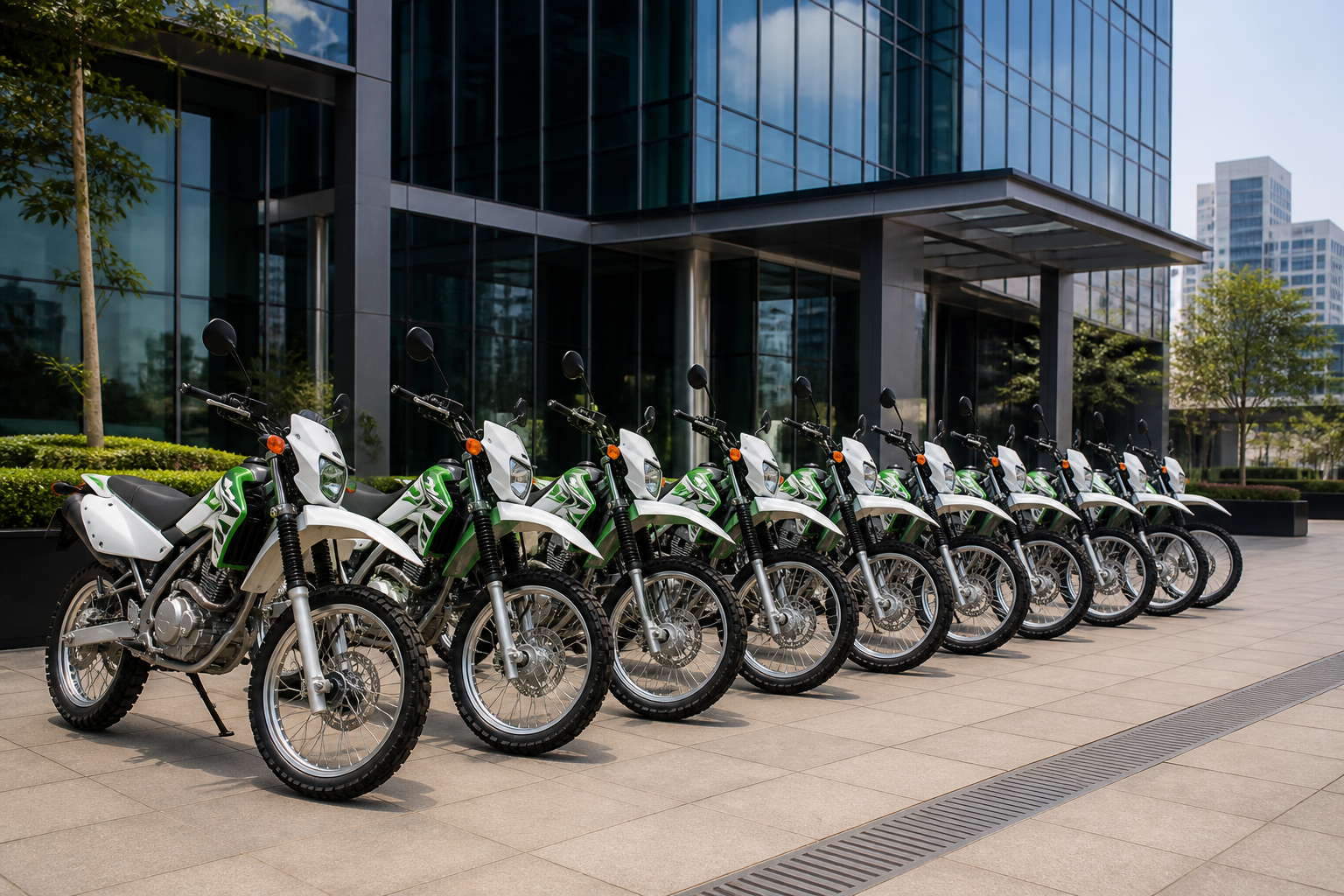
The Corporate Reality: Bike consistency matters more than perfection. You need 30 identical machines, not 30 different ideas. Standardization cuts maintenance costs by 40% and downtime by 50%. The Kawasaki KLX 230SE is emerging as the corporate standard—more on that below.
Featured Bike Deep Dive: Kawasaki KLX 230SE
The Gold Standard for Kenyan Riding
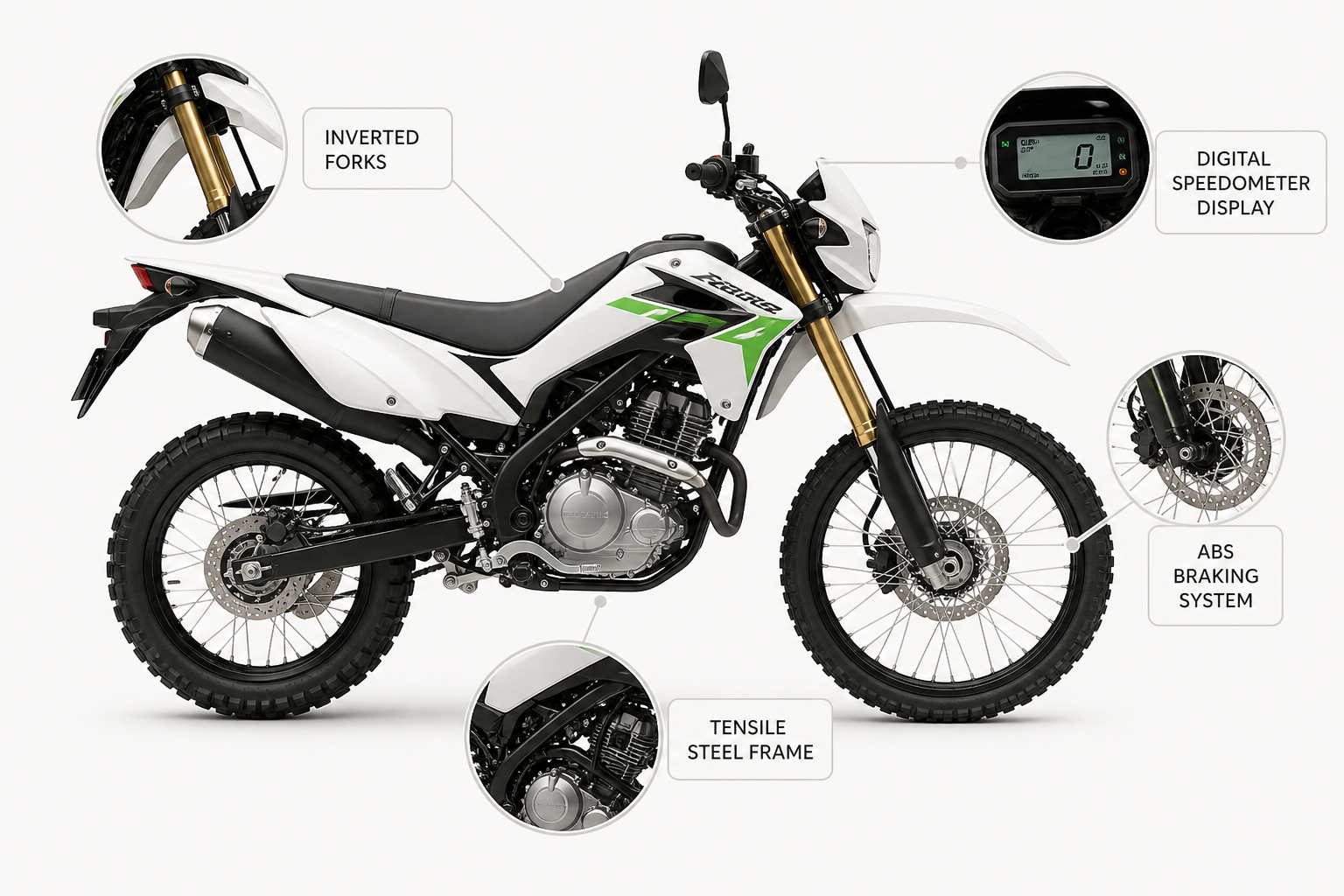
The Kawasaki KLX 230SE is not the most powerful motorbike in Kenya. It's not the cheapest, either. But it might be the smartest buy for 80% of riders—and that's why it dominates our showroom and the recommendations we give our customers.
Technical Specifications
Why Kenyans Love the KLX 230SE
Reliability Under Stress: The KLX platform has been proven in Kenya for over a decade. Dealer networks are everywhere—Nairobi, Kisumu, Eldoret, Mombasa, Nakuru. Parts availability is excellent. Kawasaki service centers maintain high standards.
ABS Standard: This is huge. ABS saves lives on wet roads and sudden stops. Most 230cc competitors don't offer it at any price. The KLX includes it as standard, showing Kawasaki's confidence in the platform.
Inverted Shocks: A feature that justifies premium pricing. Better ride quality, better handling, better durability. You feel the difference on potholed roads—and every rider in Kenya knows those roads.
EFI Advantage: Electronic fuel injection beats carburetors in altitude (important in Nairobi at 1,600m), in temperature extremes, in fuel efficiency, and in cold-start reliability. You buy a bike to ride it, not to spend Saturday mornings adjusting carburetors.
Budget-Friendly: The KLX 230SE is priced for the mass market (₦250,000–₦300,000 depending on condition), yet it offers features found on bikes costing twice as much. It's the sweet spot where quality meets affordability.
Dual-Sport Excellence: It conquers tarmac, handles dirt roads, manages light trails—and never asks you to compromise. The riding position is comfortable for hours on highway or off-road. The power delivery is linear and predictable.
Real-World Scenario: Boda Boda vs. Corporate Use
A KLX 230SE works for both full-time boda operators and corporate fleet managers—a rarity. The same bike earns ₦1,500+ daily for a boda operator (at good locations) while costing just ₦300–₦400 in fuel and maintenance per day. A corporate manager gets a durable, consistent machine that holds its value and reduces training time for new riders.
Interested in the Kawasaki KLX 230SE?
📱 Inquire on WhatsApp 📞 Call ShowroomFeatured Bike: Senke Motorcycle 150cc
The Affordable Commuter Champion

If the KLX 230SE is the premium choice, the Senke 150cc is the people's choice. This bike has put thousands of Kenyans in motion and put money in their pockets.
Why Choose Senke?
Pure Economics: For boda operators on tight margins, the Senke makes sense. Lower purchase price means lower financing costs. Better fuel economy means more profit per kilometer. Lower maintenance costs mean fewer surprise bills.
Dealer Support: Senke has strong dealer presence across Kenya. You can get service in Nairobi, Mombasa, Kisumu, or a small town. This reliability is critical for someone depending on their bike for income.
Proven Track Record: The 150cc class is Kenya's workhorse. Millions of kilometers ridden. Countless operator testimonials. The design is simple, bulletproof, and field-tested in every condition Kenya offers.
Large Fuel Tank: At 20 liters, you can ride 1,000km on a single tank. This means fewer fuel stops, less downtime, and more freedom for delivery riders or long-distance boda routes.
When NOT to Buy Senke: If you ride rough terrain regularly, want highway comfort for 3+ hour rides, or need modern tech like ABS and digital displays, consider stepping up to the KLX. The Senke is purely practical—no frills, just results.
Interested in the Senke 150cc?
📱 Inquire on WhatsApp 📞 Call ShowroomHow to Register a Motorbike in Kenya: The NTSA Process
Buying the bike is step one. Registering it legally is step two, and it's non-negotiable. Kenya's National Transport and Safety Authority (NTSA) has streamlined the process—it's actually faster than it used to be.
- Step 1 – Inspection: Visit a NTSA inspection center with your bike and proof of purchase (sales receipt or invoice). They'll verify the bike's condition, VIN (vehicle identification number), and engine number. Cost: ₦1,500.
- Step 2 – Inspectors' Report: You receive a detailed inspection report. Keep this safe; it's proof the bike passed safety checks.
- Step 3 – NTSA Online Registration: Go to NTSA's online portal (ntsa.go.ke) and complete the registration form. Upload your inspection report, proof of ownership, and ID copy. You'll pay the registration fee: ₦2,500.
- Step 4 – Receive Your Registration Certificate: Print your temporary registration certificate from the portal (you'll get it within 48 hours). The permanent certificate arrives by post within 2–4 weeks.
- Step 5 – Insurance (before road use!): Visit any insurance agent and buy third-party liability insurance. Cost: ₦8,000–₦12,000 annually depending on bike value. This is legally required before you ride on public roads.
- Step 6 – License Plates: Order customized number plates from a NTSA-approved vendor (₦2,000–₦3,000). Fit them to your bike.
- Total Cost: ₦13,500–₦17,500 for registration and initial insurance. Budget this into your total purchase cost.
Motorbike Insurance in Kenya: What You Need to Know
Types of Coverage
Third-Party Liability (Minimum Legal Requirement): Covers damage you cause to other people or property. It does NOT cover your bike or injuries to you. Cost: ₦8,000–₦10,000 annually. This is the legal minimum—don't ride without it.
Comprehensive Coverage: Includes third-party liability PLUS theft protection, accident damage to your bike, medical expenses, personal accident cover. Cost: ₦15,000–₦25,000 annually depending on bike value. Worth every shilling if your bike is your income source.
Insurance Providers in Kenya with Motorbike Experience
Not all insurers handle motorbikes well. We recommend companies with established motorbike claims processes: Britam, AAR, CIC, Jubilee, and Liberty. They understand boda operators' needs and pay claims quickly.
Reducing Your Insurance Cost
- Secure Parking: Install a locking device. Insurers give discounts for bikes kept in locked garages versus streets.
- Alarm Systems: A visible alarm box can reduce premiums by 10%.
- No Claims Discount: No accidents in 12 months? Get a 10–15% discount renewal.
- Bundle Policies: Many insurers bundle motorbike and personal accident cover cheaper than separately.
Financing Your Motorbike: Kenya Options
Option 1: SACCO Loans (Most Popular for Boda Operators)
Savings and Credit Cooperative Organisations (SACCOs) are informal lending groups, mostly popular in urban areas. If you belong to a boda SACCO, you can borrow for your bike at rates between 12–20% annually, much lower than bank loans. Loan amounts: ₦100,000–₦300,000. Repayment: 12–24 months.
Pros: Fast approval (sometimes same day), flexible repayment, lenders understand your business. Cons: Smaller loan amounts, social pressure to repay on time, membership fees.
Option 2: Bank Loans
Traditional banks like Equity, KCB, and Co-op offer motorbike loans. Interest rates: 8–15% annually. Loan amounts: ₦150,000–₦500,000. Repayment: 24–60 months.
Pros: Larger amounts, longer repayment terms, competitive rates. Cons: Slow approval (2–4 weeks), requires formal income proof (challenging for self-employed riders), collateral requirements.
Option 3: Hire Purchase Agreements
Buy now, pay later. Dealerships and specialized finance companies offer hire purchase. You take the bike home, pay a deposit (20–30%), and monthly installments for 24–36 months. Interest rates: 15–25% annually.
Pros: Fast, no income verification needed, bike is immediately usable. Cons: Higher total cost (interest adds 30–40% to the bike price), ownership delayed until final payment, strict penalty for missed payments.
Option 4: Save and Buy Cash
Yes, it's slow. But if you can save ₦200,000 over 12 months (₦17,000/month), you avoid interest completely. The math is powerful: borrowing costs you ₦40,000+ in interest. Saving that same ₦17,000/month for 12 months costs you nothing but time.
Building Your Bike Out: Essential Upgrades & Accessories
Your motorbike is a platform. Smart operators don't stop at the base machine—they add gear that increases safety, comfort, and functionality.
Tires: Vee Rubber — Grip Where It Matters
Factory tires are okay. Vee Rubber tires are excellent. Whether you ride tarmac, dirt, or both, the right tires make a tangible difference in safety and longevity. Vee Rubber offers:
- Highway Tires: Better grip on wet tarmac, longer tread life (15,000+ km). Perfect for commuters.
- All-Terrain Tires: Grip on asphalt, dirt, and light trails. Ideal for dual-sport bikes like the KLX 230SE.
- Street-Sport Tires: Maximum grip on tarmac, sharper handling. For riders pushing their bikes to the limit.
Budget ₦15,000–₦25,000 per tire for quality Vee Rubber. Replace when tread depth reaches 2mm (every 12,000–20,000 km depending on riding style).
🛞 Browse Vee Rubber TiresRiding Gear: Protect Yourself
Your bike can be replaced. You can't. Proper riding gear saves lives in accidents.
- Helmet: Non-negotiable. Budget ₦8,000–₦20,000 for a quality helmet that meets safety standards.
- Protective Jacket: Abrasion-resistant textile or leather. ₦5,000–₦15,000.
- Gloves: Reinforced at palms and fingers. ₦2,000–₦5,000.
- Riding Pants: Kevlar-lined or leather. ₦8,000–₦15,000.
- Boots: Ankle protection, oil-resistant sole. ₦5,000–₦12,000.
Total Gear Investment: ₦28,000–₦67,000. Yes, it's significant. But an accident that costs you 3 weeks off work (plus hospital bills) costs vastly more. Proper gear is the best insurance money can buy.
🧥 Shop Riding GearSpare Parts: Prepare for Maintenance
Budget-wise riders keep spare parts on hand: spare chain, spare sprockets, spare brake pads, spare spark plugs, spare oils and filters. This costs ₦5,000–₦15,000 upfront but saves thousands in emergency repairs.
🔧 Shop Spare PartsCorporate Fleet Buying: A Complete Guide for Companies
If you manage a company with delivery, logistics, or security needs, a dedicated motorbike fleet is increasingly competitive versus traditional vehicles.
The Economics of Corporate Fleets
A company with 20 motorbikes for delivery:
| Item | Per Bike (Annual) | 20-Bike Fleet (Annual) |
|---|---|---|
| Purchase (amortized over 4 years) | ₦75,000 | ₦1,500,000 |
| Fuel | ₦48,000 | ₦960,000 |
| Maintenance & Oil Changes | ₦24,000 | ₦480,000 |
| Insurance | ₦12,000 | ₦240,000 |
| Tires (replacement cycle) | ₦18,000 | ₦360,000 |
| TOTAL | ₦177,000 | ₦3,540,000 |
Compare this to a delivery van: ₦450,000+ annually (fuel is 3x higher, maintenance is 4x higher, depreciation is brutal). A 20-bike fleet is more cost-effective, more flexible (you can split operations across multiple zones), and faster in Nairobi traffic.
Standardization is Key
Buy 20 identical bikes, not 20 different models. Identical machines mean:
- Standardized parts inventory (you need only 20 types of parts, not 100)
- Standardized training (all riders learn the same mechanics)
- Predictable maintenance costs
- Easier bulk repairs at one service center
- Bulk purchasing power for spare parts and tyres
Our Recommendation: Kawasaki KLX 230SE for Corporate Fleets
The KLX 230SE is emerging as the Kenya corporate standard. Here's why companies choose it:
- Reliability: Proven platform, minimal breakdowns, available service nationwide
- All-Terrain Capability: Handles Nairobi asphalt, rural dirt roads, light off-road—your fleet does multiple job types from one machine
- Safety Features: ABS, good brakes, stable handling—fewer accidents means lower insurance and liability
- Resale Value: After 3 years, you'll recover 60–65% of the fleet value. Used KLX machines sell quickly locally
- Fuel Economy: 35–40km/L keeps your fuel budget predictable
- Spare Parts: Kawasaki dealer network means quick repairs, no waiting for obscure components
Ready to Fleet Up Your Company?
We offer corporate bulk purchasing, standardized maintenance packages, and fleet financing. Let's talk specifics.
📱 Request Fleet Quote on WhatsApp 📞 Call Our Fleet ManagerFrequently Asked Questions
A: Used Chinese bikes can go for ₦60,000–₦80,000, but we don't recommend them—parts are hard to find, warranties are minimal, and they tend to need expensive repairs quickly. The best budget option is the Senke 150cc at ₦120,000–₦160,000. You pay a bit more upfront but save vastly on maintenance and repairs. For most riders, it's the smartest money decision.
A: No. In Kenya, you need a Class K motorbike license. You can apply for it at a NTSA testing center. The test covers motorcycle-specific theory and a practical riding test. Cost is around ₦3,000–₦5,000. Many riders upgrade from their car license simultaneously.
A: Every 5,000km or 3 months, whichever comes first. A boda operator riding 5,000km monthly should service every month. A casual commuter riding 5,000km monthly should service every 3 months. Regular servicing (oil change, filter change, brake inspection) costs ₦3,000–₦5,000 and prevents expensive repairs.
A: For Kenya, manual transmission wins. Most market bikes are manual, parts are cheaper, and mechanics understand manual gearboxes intimately. Automatics are more convenient but costlier to repair. If you've never ridden a bike before, you'll learn manual in 2–3 weeks of practice. It's standard in Kenya, so learn it.
A: Yes, but with care. Tire grip reduces 20–30% in rain. Braking distances increase. Visibility worsens. Tips: Reduce speed, increase following distance, avoid puddles (they hide potholes), wear waterproof gear. Modern bikes with ABS (like the KLX 230SE) are safer in rain because they prevent wheel lockup during hard braking. If you're uncomfortable, don't ride in heavy downpour—it's not worth the risk.
The Motorbike You Buy Should Match the Life You Live
This guide has covered categories, models, registrations, financing, insurance, and fleet solutions. But the underlying truth is simple: the best motorbike is the one that fits your life.
A boda operator needs maximum fuel efficiency and parts availability—the Senke 150cc delivers that perfectly. A farmer in a rough area needs all-terrain capability—the Kawasaki KLX 230SE is built for exactly that. A corporate manager needs reliability and consistency—the KLX again wins. A young urban commuter might want lighter weight and aggressive styling—dual-sport still outperforms sports bikes in real-world Kenya use.
The one universal truth: buy from an established brand with a dealer network you can access easily. Your motorbike is your investment, your income source, or your transportation backbone—don't gamble on an unknown brand because it saves ₦20,000 today only to cost ₦500,000 in downtime and repairs later.
Ready to Buy? Let's Talk.
Visit Cycle Importers in Nairobi or reach out today.
📱 WhatsApp: +254720283468
📞 Call: +254720283468
🌐 Website: cycleimporters.co.ke
We stock the Kawasaki KLX 230SE and Senke 150cc year-round. Not in stock? Request a quote—we source exactly what you need.
Next Steps
Browse our full motorbike inventory, check tire availability, or request a fleet quote.
🔗 View All Motorbikes 🔧 Shop Parts & Accessories 📋 Request Fleet Quote