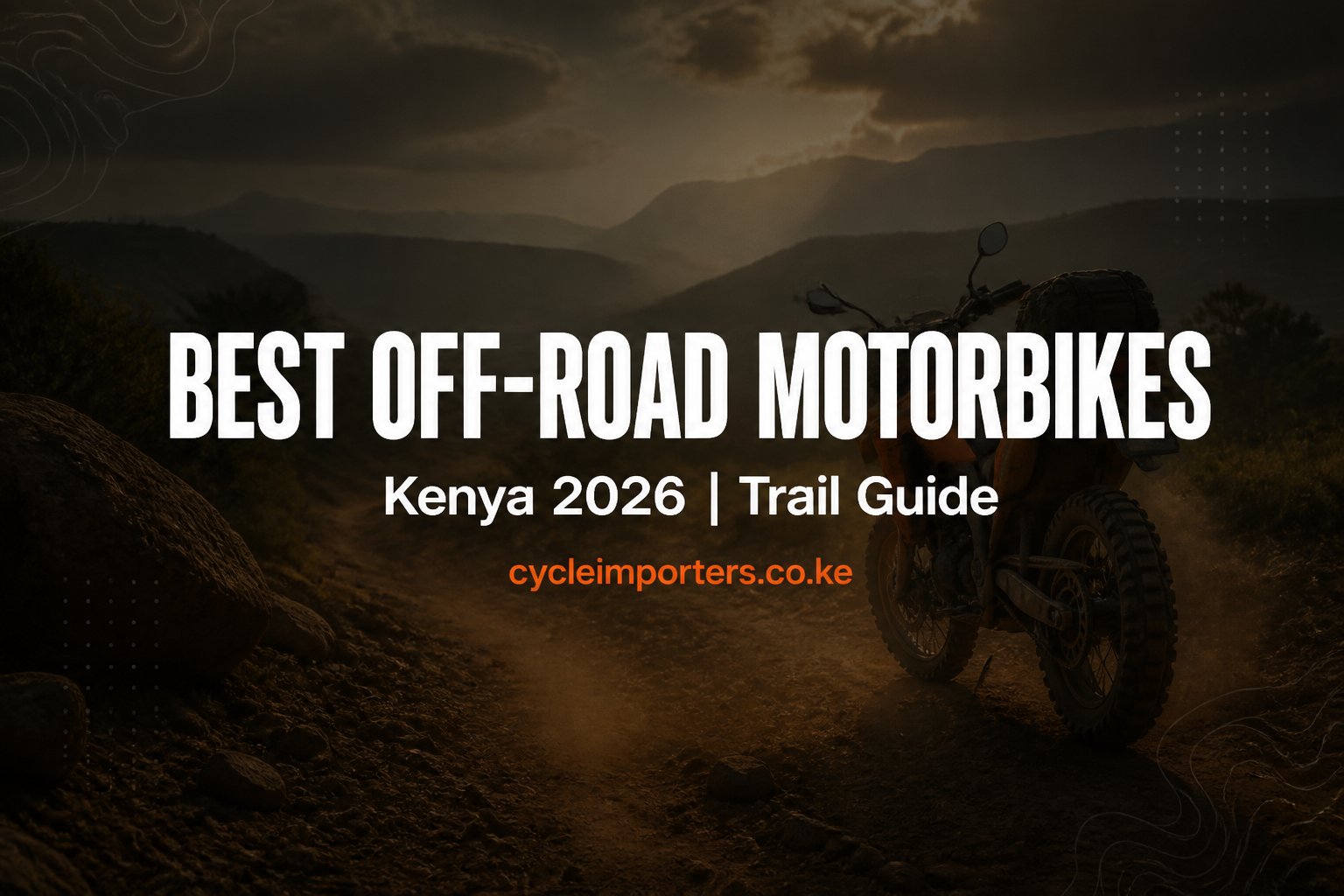
Best Off-Road Motorbikes for Kenya 2026
Kenya's diverse terrain - from the rugged roads around Mount Kenya to the sandy tracks of the Maasai Mara, and the challenging routes through Turkana - demands motorcycles built for adventure. If you're a rider who ventures beyond Nairobi's tarmac, an off-road or adventure-style motorbike isn't just a luxury - it's a necessity. This guide reviews the best off-road options available to Kenyan riders in 2026.
Kenya's Off-Road Terrain: What You'll Face
Before selecting an off-road bike, understand the terrain you'll encounter:
- Mt. Kenya region: Rocky, high-altitude trails with loose gravel and steep inclines. Requires serious ground clearance and strong suspension
- Maasai Mara access roads: Sandy, rutted tracks that demand torque and lightweight handling. Tire choice is critical here
- Turkana routes: Extreme terrain with deep sand, rocky outcrops, and minimal infrastructure. Only experienced riders should attempt this
- Coastal hinterland: Sandy, sometimes boggy tracks near Mombasa and Malindi. Good for beginners to intermediate riders
- Rift Valley slopes: Challenging elevation changes with variable ground conditions. Excellent practice ground
Each terrain demands different bike characteristics. A machine suited for Mara sand might struggle on rocky Mt. Kenya trails.
Must-Have Features for Off-Road Bikes
Minimum Ground Clearance
240mm minimum - Anything less will scrape on Kenya's unforgiving terrain. Ideal is 250-280mm for rocky areas.
Suspension Travel
Front: 150-200mm | Rear: 140-180mm - More travel absorbs rocky impacts; less travel offers better handling in sand.
Tire Type
Spoke wheels (not cast alloy) - They flex and absorb impacts. Spoke wheels also survive crashes better than rigid alloy wheels.
Engine Displacement
150cc-250cc ideal for Kenya - Lightweight enough for tight single-track trails, powerful enough for soft sand and steep inclines.
Transmission
Manual clutch essential - You need engine braking and precise throttle control on technical terrain. Semi-automatic won't cut it.
Skid Plate
Steel frame and engine protection - Prevents costly damage when you hit rocks or get bogged down.
Top Off-Road Motorcycles for Kenya 2026
1. Yamaha WR155 (The Best Overall Choice)
Price: KES 480,000-520,000 (new import)
The Yamaha WR155 is arguably the best balanced off-road bike for Kenyan terrain. It combines proven Yamaha reliability with genuine dirt-bike credentials. The WR155 features a 155cc air-cooled engine (actual displacement, not claimed), genuine Yamaha suspension components, and spoke wheels - exactly what Kenya's trails demand.
Ground clearance: 270mm | Suspension: 180mm (front/rear) | Tire size: 70/100-19 (front), 80/100-16 (rear)
Why it wins: Lightweight (145 kg), reliable, excellent fuel economy (50+ km/liter), and genuine off-road engineering. Spare parts flow through Nairobi dealers who service larger Yamaha models.
Best for: Intermediate to advanced riders tackling Mara, Rift Valley, and Mt. Kenya foothills.
2. Kawasaki KLX 230SE (The Adventure Specialist)
Price: KES 550,000-600,000 (imported)
The KLX 230SE is purpose-built for adventure riding on variable terrain. Its 230cc engine delivers strong torque for sandy conditions, while the 280mm ground clearance handles rocky terrain confidently. Kawasaki's reputation in Kenya is solid, and dealerships in Nairobi provide good after-sales support.
Ground clearance: 280mm | Suspension: 190mm (front), 180mm (rear) | Tire size: 80/100-21 (front), 100/100-18 (rear)
Why it wins: More powerful than the WR155, better torque for sand, superior suspension geometry for high-speed off-road work, cast wheels (sturdy), and proven longevity across African terrain.
Best for: Serious adventurers, longer expeditions, Turkana and deep-sand environments.
3. Honda CRF 150L (The Reliable Workhorse)
Price: KES 420,000-470,000 (new)
Honda's street-legal dirt bike is exactly what many Kenyan riders need. The CRF 150L bridges street and trail seamlessly, with enough off-road chops for weekend adventures. It's lightweight (160 kg), fuel-efficient, and Honda parts are ubiquitous across Kenya.
Ground clearance: 268mm | Suspension: 190mm (front), 185mm (rear) | Tire size: 70/100-19 (front), 80/100-16 (rear)
Why it wins: Honda reliability is legendary in Kenya. Parts availability is exceptional. The bike handles 70% street, 30% trail work perfectly. Lower price point than competitors.
Best for: First-time off-road riders, commuters who want weekend trail capability, budget-conscious adventurers.
4. Suzuki DR-Z 400 (The High-Displacement Alternative)
Price: KES 600,000+ (used imports)
If you want raw power for serious off-road work, the DR-Z 400 delivers. Its 398cc engine makes quick work of deep sand and steep climbs. It's heavier (170 kg) than smaller bikes, but the additional grunt suits experienced riders tackling Turkana and beyond.
Ground clearance: 290mm | Suspension: 210mm (both) | Tire size: 80/100-21 (front), 120/90-18 (rear)
Why it wins: Most powerful option in this list. Exceptional suspension. Spoke wheels. Built for serious off-road work.
Best for: Experienced riders, expedition work, rock-crawling, sand dune navigation.
Off-Road Bike Comparison Table
| Model | Engine (cc) | Ground Clearance | Weight | Suspension (F/R) | Price (KES) | Best For |
|---|---|---|---|---|---|---|
| Yamaha WR155 | 155cc | 270mm | 145kg | 180/180mm | 480-520K | Intermediate riders |
| Kawasaki KLX 230SE | 230cc | 280mm | 156kg | 190/180mm | 550-600K | Serious adventures |
| Honda CRF 150L | 150cc | 268mm | 160kg | 190/185mm | 420-470K | Street + trail mix |
| Suzuki DR-Z 400 | 398cc | 290mm | 170kg | 210/210mm | 600K+ | Expert terrain |
Tire Selection for Kenyan Terrain
Your tire choice can make or break an off-road adventure. Here's what works where:
Sandy Terrain (Mara, Coastal)
- Front: 80/100-21 with knobby pattern (deep treads)
- Rear: 100/100-18 aggressive tread
- Pressure: 1.0-1.2 bar (lower pressure floats on sand)
- Recommendation: Dunlop Geomax or Michelin Anakee
Rocky Terrain (Mt. Kenya foothills)
- Front: 70/100-19 with medium knobs
- Rear: 80/100-16 durable compound
- Pressure: 1.4-1.6 bar (higher for rim protection)
- Recommendation: Bridgestone Trail Wing or Pirelli Scorpion
Mixed Terrain (Rift Valley)
- Front: 80/100-21 medium tread
- Rear: 90/100-16 versatile compound
- Pressure: 1.2-1.4 bar (balanced)
- Recommendation: Maxxis Traxer or IRC Mythos
Cost: Off-road tires in Nairobi range from KES 4,500-8,000 per tire, depending on size and brand. Budget KES 13,000-16,000 for a full set. Expect to replace them every 8,000-10,000 km of serious off-road riding.
Off-Road Riding Essentials for Kenya
Owning an off-road bike is only half the battle. You'll also need:
- Protective Gear: Off-road helmet (KES 8,000-15,000), chest protector, knee/shin guards, gloves - total KES 20,000-35,000
- Spare Tube & Tire Repair Kit: KES 2,000 (punctures are common in rocky terrain)
- Engine Oil & Filters: Off-road bikes consume oil faster. Budget KES 1,000-2,000 per month
- Suspension Maintenance: Annual service costs KES 8,000-12,000
- GPS/Navigation: Download offline maps (Google Maps works but is data-heavy; consider Gaia GPS or OsmAnd)
- Communication: Portable power bank, backup battery. Consider a satellite communicator for Turkana expeditions
Ready to Ride Off-Road? Contact Cycle Importers Today!
Rider Skill & Terrain Matching
Beginner off-road riders: Start with Honda CRF 150L on Rift Valley gentle slopes. Build skills before attempting Mara or rocky terrain. Expect 12-18 months to develop real off-road competency.
Intermediate riders: Yamaha WR155 on Mara sand and Mt. Kenya foothills. You've mastered clutch control and can handle technical single-track.
Advanced riders: Kawasaki KLX 230SE or Suzuki DR-Z 400 on any Kenyan terrain. You understand weight distribution, engine braking, and risk management.
Maintenance for Off-Road Bikes
- Air filter cleaning: Every 500km (sandy terrain requires more frequent cleaning)
- Oil changes: Every 1,500km (off-road work is harder on engines)
- Suspension fluid: Check every month; full service annually
- Spoke tension: Check every 2,000km (rough terrain loosens spokes)
- Chain adjustment: Every 500km for off-road bikes
- Brake pad inspection: Monthly (off-road braking is more intense)
Ready to Ride Off-Road? Contact Cycle Importers Today!
FAQ - Off-Road Motorbikes in Kenya
1. Can I ride an off-road bike legally on Kenyan roads?
Yes, but ensure it's registered and insured. The Honda CRF 150L is fully street-legal. Yamaha WR155 requires registration but isn't street-licensed in all regions - check with your local NTSA office.
2. Which bike should I start with as a beginner?
The Honda CRF 150L is ideal. It's light, manageable, and forgiving. Avoid the KLX 230SE or DR-Z 400 until you have 100+ hours of off-road experience.
3. How often should I service an off-road bike?
Every 1,500 km for oil, every 500 km for air filter checks (more in sandy terrain). Suspension needs annual service. More frequently than street bikes due to harder work.
4. Can I use an off-road bike for commuting?
Yes, if you choose the Honda CRF 150L. It handles street riding well but consumes more fuel than a street-focused 150cc bike. The WR155 can commute but isn't optimized for it.
5. Where can I find off-road training in Kenya?
Nairobi Motorsports Club offers off-road training courses. Several independent instructors operate around Mount Kenya. Expect to pay KES 5,000-10,000 for a full-day course.