
Fuel Efficiency Tips for Boda Boda Operators in Kenya 2026
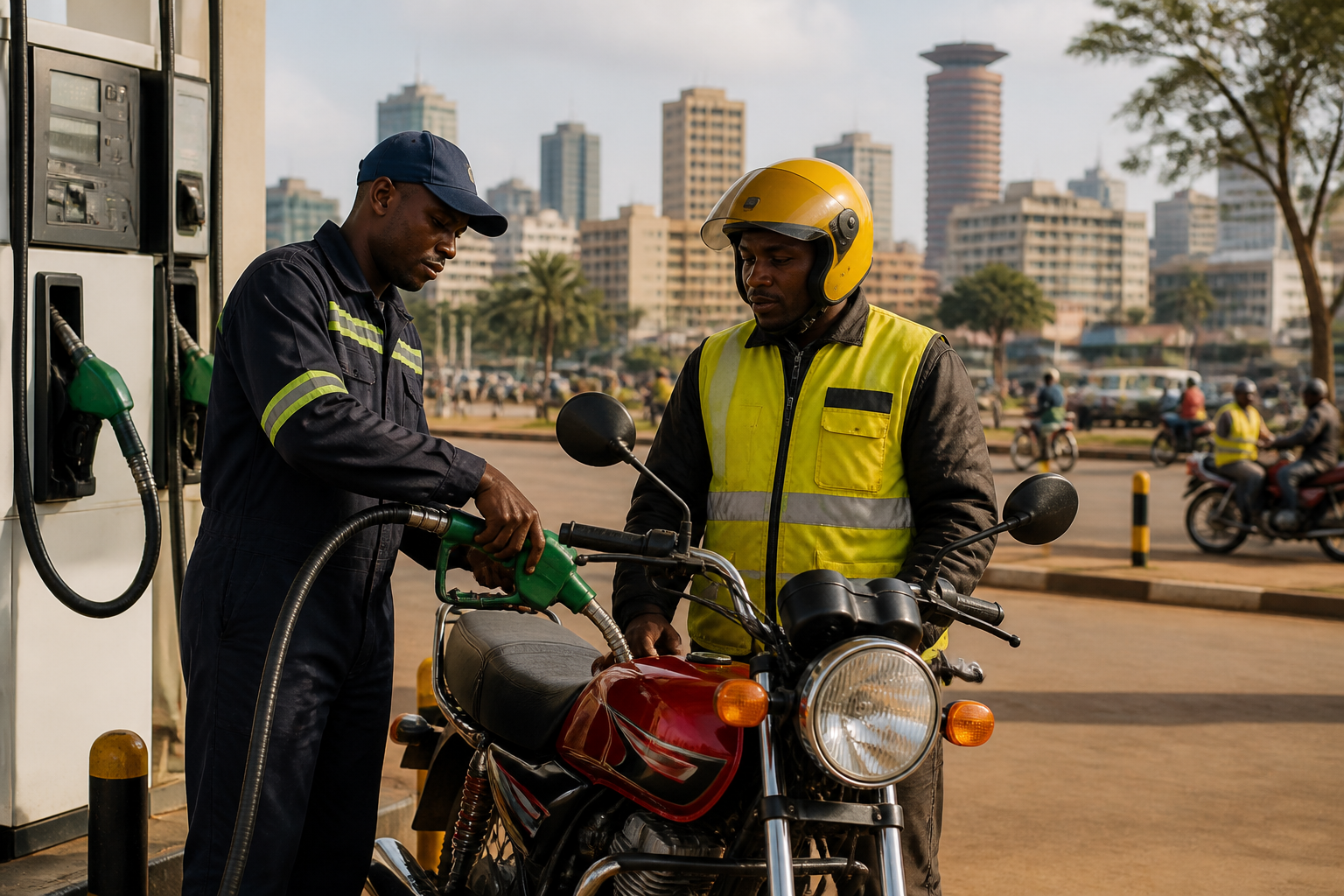
For boda boda operators in Kenya, fuel costs represent one of the largest operational expenses. Rising fuel prices directly squeeze profitability. Yet many riders unnecessarily waste fuel through poor riding habits, neglected maintenance, and suboptimal motorcycle setup. Small improvements in fuel efficiency compound dramatically across months and years of operation. This comprehensive guide reveals practical strategies professional boda boda operators use to maximize fuel efficiency, reduce monthly fuel expenses, and increase net earnings.
Understanding Motorcycle Fuel Consumption in Kenya
Modern motorcycles in Kenya typically achieve 35-45 kilometers per liter depending on engine efficiency, rider habits, maintenance condition, and riding environment. A Honda CG125 might deliver 40-45 km/l with efficient riding, while the same motorcycle in the hands of an aggressive rider might achieve only 30-35 km/l. This variance represents significant cost differences for professional operators working daily.
Consider the financial impact: a boda boda operator traveling 15,000 km annually at 35 km/l requires 428 liters of fuel annually. At Kenya's 2026 fuel prices of approximately 200 KES per liter, this equals 85,600 KES annual fuel cost. That same operator achieving 40 km/l through efficiency improvements requires only 375 liters—a savings of 10,600 KES annually (about 883 KES monthly). Across a fleet or over many years, these savings become substantial.
Riding Techniques That Maximize Fuel Efficiency
Smooth Acceleration
Aggressive acceleration demands maximum engine load, burning fuel inefficiently. Instead, accelerate smoothly and gradually. Smooth acceleration reduces fuel consumption by 15-20% compared to aggressive starts. In Nairobi's heavy traffic, smooth acceleration also maintains better vehicle control and improves safety.
Maintain Steady Speeds
Constant speed changes demand repeated acceleration and braking, wasting fuel. Instead, maintain consistent speeds appropriate to traffic conditions. On highways, maintain steady speeds slightly below maximum comfortable speeds. Each 5 km/h reduction in speed above 80 km/h typically improves fuel economy by 2-3%.
Anticipate Traffic and Coast When Possible
Looking ahead at traffic allows you to coast (reduce throttle) well before needing to brake. Coasting reduces fuel consumption to near-zero, improving overall efficiency. Experienced boda boda operators in Nairobi master this technique, approaching red lights early and coasting rather than accelerating then braking.
Avoid Excessive Idling
An idling motorcycle consumes fuel without covering distance, effectively achieving 0 km/l. During traffic jams or long waits, switch off your engine rather than maintaining idle. Even 20-30 seconds of saved idling per trip accumulates to significant fuel savings across daily operations.
Downshift Rather Than Brake
Engine braking (downshifting to lower gears for braking) reduces throttle opening, consuming minimal fuel. This contrasts with braking while maintaining throttle, which wastes energy. In city riding with frequent stops, engine braking can improve fuel economy by 5-10%.
Mechanical Maintenance for Fuel Efficiency
Keep Your Air Filter Clean
A dirty air filter restricts airflow to the engine, causing it to run rich (too much fuel relative to air). This dramatically reduces efficiency. Check your air filter monthly in Kenya's dusty environment. A clean air filter can improve fuel economy by 5-10%. Replace or clean the filter as needed—costs around 800-1,200 KES, with fuel savings recovering this investment quickly.
Maintain Proper Spark Plug Condition
Worn or fouled spark plugs create incomplete combustion, wasting fuel. Replace spark plugs per manufacturer recommendations (typically every 5,000-8,000 km). New spark plugs improve fuel economy by 3-5%.
Optimize Tire Pressure
Under-inflated tires increase rolling resistance, requiring more engine power and fuel to maintain speed. Over-inflated tires create a harsh ride and uneven wear. Maintain manufacturer-recommended tire pressures precisely. Proper tire pressure can improve fuel efficiency by 3-4%. Check tire pressure weekly—it takes two minutes and significantly impacts economy.
Regular Oil Changes
Fresh, clean oil reduces engine friction and improves efficiency. Dirty oil thickens, increasing friction and fuel consumption. Change oil per motorcycle recommendations (typically every 1,000-1,500 km). Regular oil changes improve fuel economy by 2-3% while extending engine life.
Carburetor Tuning
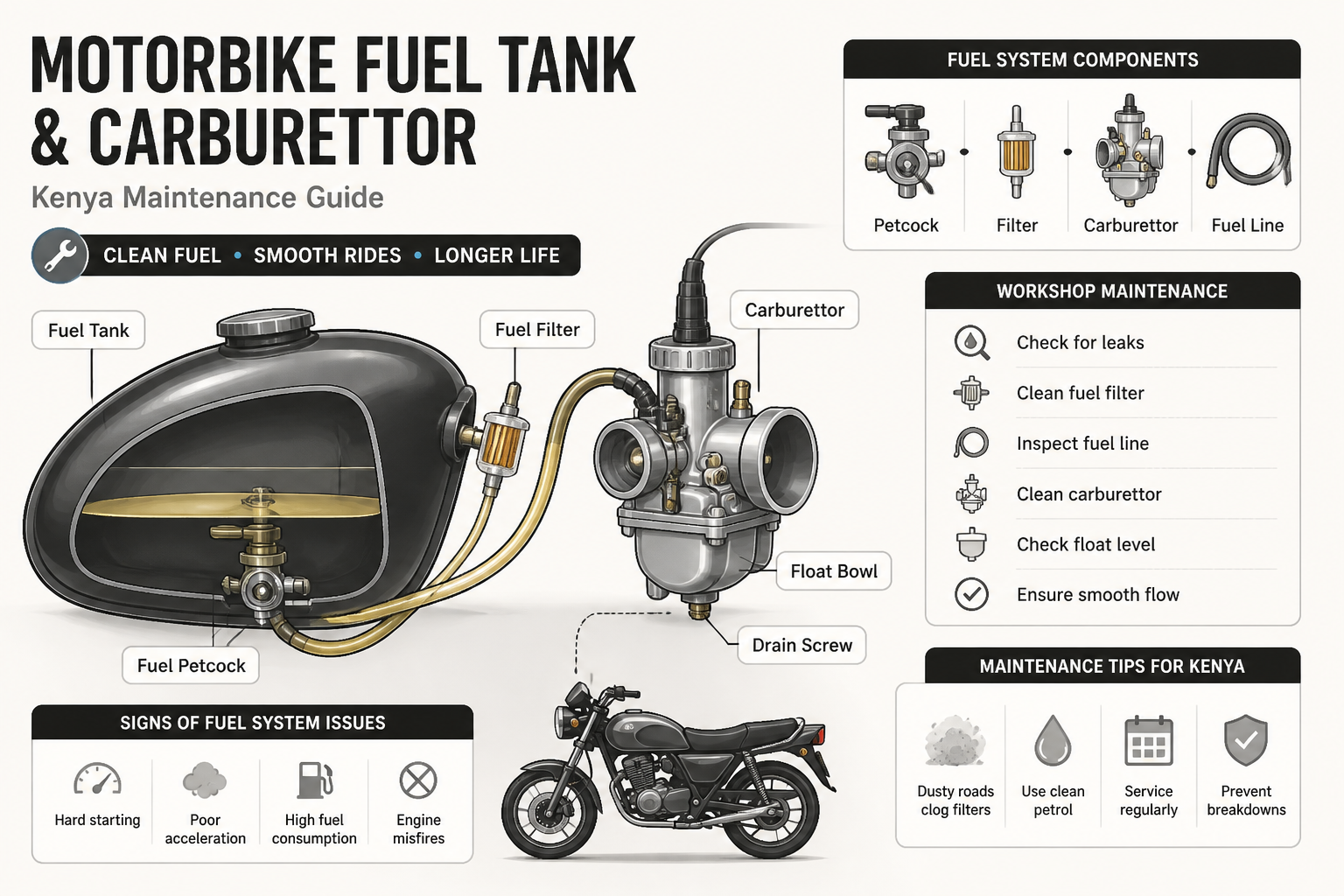
For carbureted motorcycles (most in Kenya's market), the carburetor mixes air and fuel. A properly tuned carburetor achieves optimal air-fuel ratio for efficiency. If your motorcycle seems less economical than before, carburetor service may be needed. Professional carburetor cleaning and tuning costs 1,500-2,500 KES and often improves fuel economy by 10-15%.
Motorcycle Setup and Configuration Impact
Reduce Unnecessary Weight
Every kilogram of extra weight reduces fuel economy slightly. Remove unnecessary items from your motorcycle. Carry only essential passengers and cargo. For boda boda operators, passenger count affects fuel consumption—try to keep loads reasonable while maximizing revenue.
Check Wheel Alignment
Misaligned wheels create drag and resistance, reducing efficiency. If your motorcycle pulls to one side or requires continuous steering correction, alignment may need adjustment. Proper alignment improves fuel economy by 2-3% while improving safety and tire life.
Ensure Brake Shoes Don't Drag
Worn or misadjusted brakes can drag continuously, creating resistance that wastes fuel. If your motorcycle requires more effort to maintain speed than normal, have brakes inspected. Proper brake adjustment improves efficiency by 2-5%.
Fuel Quality and Storage Considerations
Use Quality Fuel
Low-quality or contaminated fuel burns inefficiently. Buy fuel from reputable stations in Kenya. Quality fuel ensures proper combustion and optimal efficiency. While quality fuel might cost slightly more, the improved efficiency and reduced engine wear justify the cost.
Avoid Fuel Contamination
Water in fuel tanks causes poor combustion and efficiency loss. Use fuel filters appropriate to your motorcycle. Many riders add fuel additives (around 300-500 KES monthly) to prevent contamination and improve combustion efficiency, recovering 2-3% in economy.
Calculating Your Fuel Consumption and Improvements
Baseline Measurement
To track efficiency improvements, establish a baseline. Fill your tank to full, note the odometer reading, ride normally, then refuel to full again. Calculate kilometers traveled divided by liters consumed to determine your baseline fuel economy.
Track Improvements
After implementing efficiency improvements, repeat the measurement. Compare results. Most operators implementing the techniques in this guide achieve 5-15% fuel economy improvements. This directly translates to monthly cost savings.
| Efficiency Improvement | Potential Economy Gain | Monthly Savings at 15,000 km/month |
|---|---|---|
| Smooth acceleration + steady speeds | 8-12% | 1,500-2,200 KES |
| Air filter maintenance + tire pressure | 5-8% | 900-1,500 KES |
| Carburetor tuning | 10-15% | 1,900-2,800 KES |
| Combined improvements | 25-35% | 4,700-6,600 KES |
Route Optimization for Fuel Efficiency
Plan Efficient Routes
Long, inefficient routes waste fuel. Smart route planning reduces unnecessary mileage. If you know Nairobi traffic patterns, you can often find shorter routes avoiding congestion. Avoiding traffic congestion directly improves fuel economy through reduced idling and smoother riding.
Combine Multiple Jobs
Instead of completing individual jobs across the city, plan routes combining multiple nearby jobs. Fewer total kilometers means less fuel consumption. This strategy also increases hourly earnings by reducing travel time between jobs.
Technology and Monitoring
Fuel Consumption Logging
Some riders maintain fuel logs recording consumption trends. This identifies developing maintenance issues (sudden efficiency drops often indicate problems) and tracks improvement progress. Regular logging is simple yet highly effective.
Digital Monitoring
Some modern motorcycles or aftermarket devices provide real-time fuel consumption data. While basic motorcycles in Kenya don't offer this, understanding consumption patterns through calculation is equally effective.
Maximize Your Boda Boda Efficiency
Get quality fuel, premium parts, and maintenance supplies at Cycle Importers Kenya to optimize your motorcycle's performance and economy.
Shop Parts & Accessories Maintenance ServicesKey Takeaways - Fuel Efficiency Kenya
- Small improvements in fuel efficiency compound dramatically—increasing efficiency from 35 to 40 km/l saves 10,600 KES annually for typical boda boda operators
- Smooth acceleration, steady speeds, and anticipatory braking are the highest-impact riding techniques for fuel economy improvement
- Regular air filter cleaning, tire pressure maintenance, and spark plug replacement deliver 10-15% fuel economy improvements at minimal cost
- Carburetor tuning can improve fuel economy by 10-15%—a smart investment for professional operators prioritizing profitability
- Combined riding discipline and maintenance improvements can achieve 25-35% fuel economy gains, translating to 4,700-6,600 KES monthly savings