
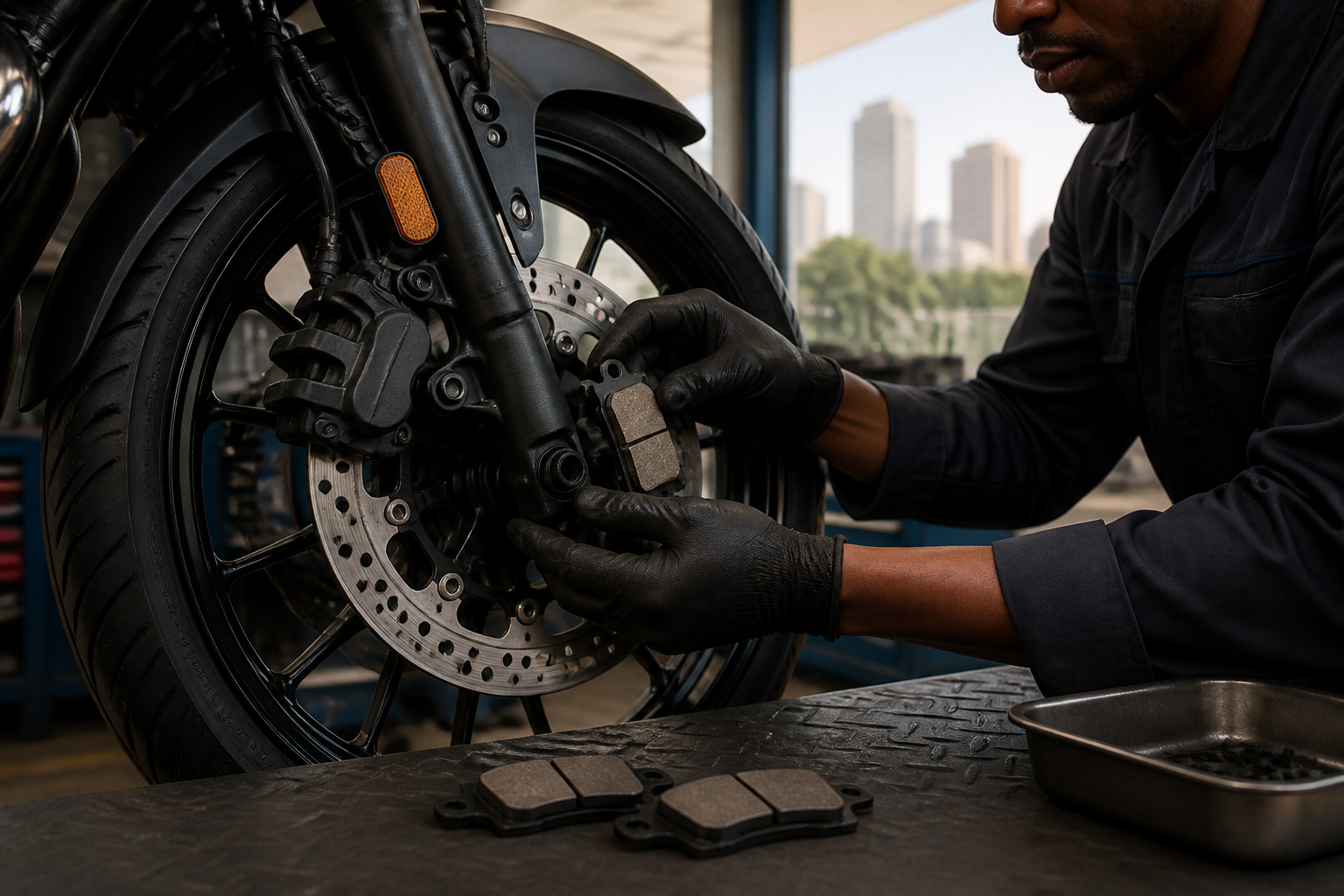
Brake Pad Replacement Guide for Motorbikes in Kenya
Why Motorcycle Brake Maintenance Matters in Kenya
Kenya’s roads present unique braking challenges. In Nairobi, heavy traffic with frequent emergency stops accelerates brake pad wear. Unpaved roads generate dust that increases friction and heat. Rising temperatures in cities like Mombasa put additional strain on brake systems. For these reasons, boda boda brakes require more frequent inspection and maintenance than motorcycles in temperate climates.
Neglecting brake pad replacement is not just an inconvenience—it’s dangerous. Worn brake pads increase stopping distance, reduce braking power, and can cause brake failure. In Nairobi’s congested streets, these consequences can be catastrophic. Regular brake maintenance is an investment in safety.
Understanding Your Motorcycle’s Brake System
Most motorcycles in Kenya use hydraulic disc brakes on both front and rear wheels. The system works by transferring pressure from the brake lever through hydraulic fluid to brake calipers that squeeze brake pads against rotating brake discs, creating friction that slows the motorcycle.
Key Brake Components
- Brake Pads: Friction material that contacts the brake disc, creating stopping force.
- Brake Discs (Rotors): Metal rings that rotate with the wheel and are squeezed by brake pads.
- Brake Calipers: Hydraulic devices that house brake pads and apply pressure to them.
- Master Cylinder: The hydraulic pump that generates brake pressure when you pull the brake lever.
- Brake Lines: Tubes carrying hydraulic fluid from the master cylinder to the calipers.
Warning Signs Your Motorbike Brake Pads Need Replacement
Audible Squeaking or Squealing
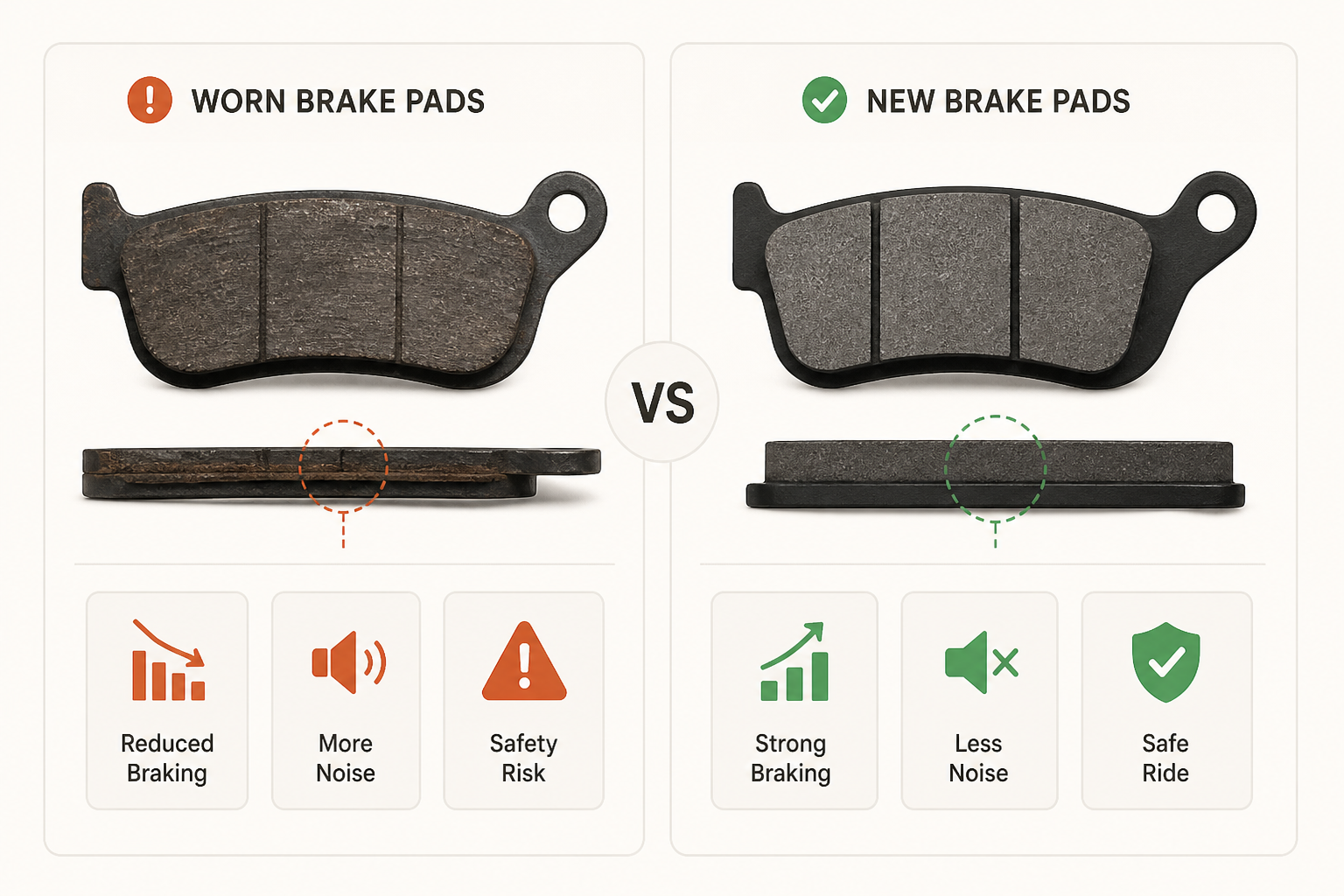
Most modern motorcycle brake pads include a metal wear indicator that creates a squeaking sound when brake pads wear thin. If your brakes squeak consistently in Nairobi traffic, brake pad replacement is likely needed soon. Don’t ignore this warning signal—it exists specifically to alert you before brake failure occurs.
Reduced Braking Performance
If you need to squeeze the brake lever harder to achieve the same stopping power, or if braking distance increases noticeably, worn brake pads are the likely culprit. This is especially noticeable when riding downhill or making emergency stops in heavy Nairobi traffic.
Brake Lever Feels Soft or Spongy
Pressure loss in the braking system indicates either worn pads or potentially a brake fluid leak. If the brake lever travels too far before gripping, have your brakes inspected immediately. This is a serious safety issue requiring urgent attention.
Visible Brake Pad Wear
Many motorcycles allow visual inspection of brake pads without wheel removal. If the friction material appears thinner than 2-3mm, replacement is overdue. Worn brake pads look dramatically thinner than new pads.
Brake Disc Damage
Severely worn brake pads can damage the brake disc (rotor) itself. If you notice grooves, warping, or severe scoring on the brake disc during inspection, the disc may need replacement along with the pads, increasing repair costs.
How Often Should You Replace Motorcycle Brake Pads in Kenya?
Brake pad lifespan depends on riding habits, traffic conditions, and environmental factors specific to Kenya:
- Boda boda operators in Nairobi: Heavy urban use with frequent stops wears pads quickly—expect replacement every 10,000-15,000 km.
- Regular commuters: Moderate riding patterns typically mean replacement every 15,000-20,000 km.
- Highway riders: Less frequent braking on open roads extends pad life to 20,000-30,000 km.
- Quality of pads: Premium brake pads often last 20-30% longer than budget options.
- Climate factors: Kenya’s heat accelerates pad material degradation, shortening lifespan compared to cooler climates.
Best Motorcycle Brake Pad Brands in Kenya
Premium OEM Brands
Honda, Suzuki, Yamaha (Original Equipment): Original equipment manufacturer brake pads are engineered for your specific motorcycle. While more expensive, they provide perfect fitment and performance matching your bike’s specifications. Worth the investment for critical safety systems.
Quality Aftermarket Brands
EBC, Brembo, Ferodo, TRW: These reputable aftermarket brands offer excellent brake pads at reasonable prices. Available widely in Nairobi, they provide reliable performance and good value. Many professional mechanics recommend these brands for Kenya’s riding conditions.
Mid-Range Options
Ashima, Magura, Hayes: These brands provide solid brake pads suitable for boda boda use and daily riding. Mid-range pads balance cost and performance effectively for Kenya market.
Motorbike Brake Pads Price in Kenya 2026
| Pad Type | Price Range (KES) | Quality Level | Best For |
|---|---|---|---|
| Budget Generic Pads | 1,200 – 2,000 | Low-Medium | Emergency replacement, minimal budget |
| Mid-Range Quality | 2,000 – 3,500 | Good | Boda boda operators, daily riders |
| Premium OEM Pads | 3,500 – 5,500 | Excellent | Performance-critical applications |
| Installation Service | 500 – 1,500 | Professional | Professional replacement labor |
DIY Brake Pad Replacement – Step by Step
Brake pad replacement is manageable for riders comfortable with basic mechanical work. Here’s the process for disc brake systems:
Tools and Materials Needed
- Brake pads (appropriate for your motorcycle)
- Allen wrenches or hex keys
- Socket wrench set
- Brake cleaner spray
- Rubber gloves
- New brake fluid (if needed)
- Protective eye protection
Installation Steps
- Secure the motorcycle: Use a center stand or motorcycle jack to stabilize the bike safely. Ensure the wheel is raised off the ground.
- Remove the wheel: Unbolt the wheel and remove it carefully. Set the wheel aside where it won’t roll.
- Access the caliper: Locate the brake caliper holding the brake pads. You’ll see the brake disc visible behind it.
- Unbolt the caliper: Remove the caliper bolts using appropriate hex wrenches or sockets. Usually 2-3 bolts hold the caliper.
- Remove old pads: Slide the caliper off the brake disc. The old brake pads should come out easily. Inspect the brake disc for damage.
- Clean the caliper: Spray brake cleaner on the caliper interior and brake disc. Remove dust and debris accumulated in Kenya’s environment.
- Prepare new pads: Some new pads have backing plates requiring installation. Check your specific pads’ requirements.
- Position new pads: Insert new brake pads into the caliper, ensuring they sit flush and properly positioned.
- Reinstall caliper: Slide the caliper back over the brake disc carefully. Align it properly to avoid disc rubbing.
- Tighten caliper bolts: Reinstall and tighten the caliper bolts to manufacturer specifications. Don’t overtighten.
- Reinstall wheel: Put the wheel back on the motorcycle and tighten lug nuts securely.
- Test brakes: Before riding, squeeze the brake lever multiple times to ensure brakes engage properly. The lever might feel soft initially.
Brake Fluid Checks During Pad Replacement
When replacing brake pads, check your brake fluid level. As pads wear, the brake fluid level drops (piston pushes further to reach worn pads). Once new pads are installed, fluid levels drop back to normal. If brake fluid level is below the minimum line, top it up with the correct brake fluid type for your motorcycle—usually DOT 3, DOT 4, or mineral oil depending on your braking system.
Professional Brake Pad Replacement Services
If you’re uncomfortable replacing brake pads yourself, professional service is readily available. Cycle Importers Kenya offers professional brake pad replacement with:
- Genuine quality brake pads from trusted brands
- Expert installation by experienced mechanics
- Brake system inspection to identify any issues
- Road testing to ensure proper brake operation
- Warranty on parts and labor
Extending Brake Pad Life in Kenya
Smooth Braking Technique
Aggressive braking in Nairobi traffic accelerates pad wear. Anticipate stops early and apply brake pressure gradually. Smooth braking extends pad life significantly while improving fuel efficiency and passenger comfort.
Engine Braking
Downshifting to lower gears reduces reliance on hydraulic brakes. In Nairobi’s heavy traffic, downshifting before slowing reduces brake pad friction and extends pad life. This technique also provides better control on slippery roads.
Regular Maintenance
Keep your brake system clean and well-maintained. Regular inspection catches developing problems early. Maintain proper brake fluid levels and quality. These practices extend the life of all brake components.
Quality Brake Pads and Professional Service at Cycle Importers Kenya
Get genuine brake pads and expert replacement services to keep your motorcycle safe on Kenya’s roads.
Shop Brake Pads Schedule ServiceKey Takeaways – Brake Pad Replacement Kenya
- Replace motorcycle brake pads as soon as you notice squeaking, reduced braking power, or lever travel increasing—don’t delay brake maintenance for safety
- In Kenya’s heavy urban use, boda boda operators typically need brake pad replacement every 10,000-15,000 km due to frequent stops in Nairobi traffic
- Mid-range quality brake pads (2,000-3,500 KES) provide excellent value for daily riders; invest in quality over budget options for better performance and safety
- DIY replacement is possible for mechanically comfortable riders, but professional installation is recommended for this critical safety system
- Smooth braking technique and regular maintenance extend brake pad life and improve overall braking system performance in Kenya’s challenging riding conditions