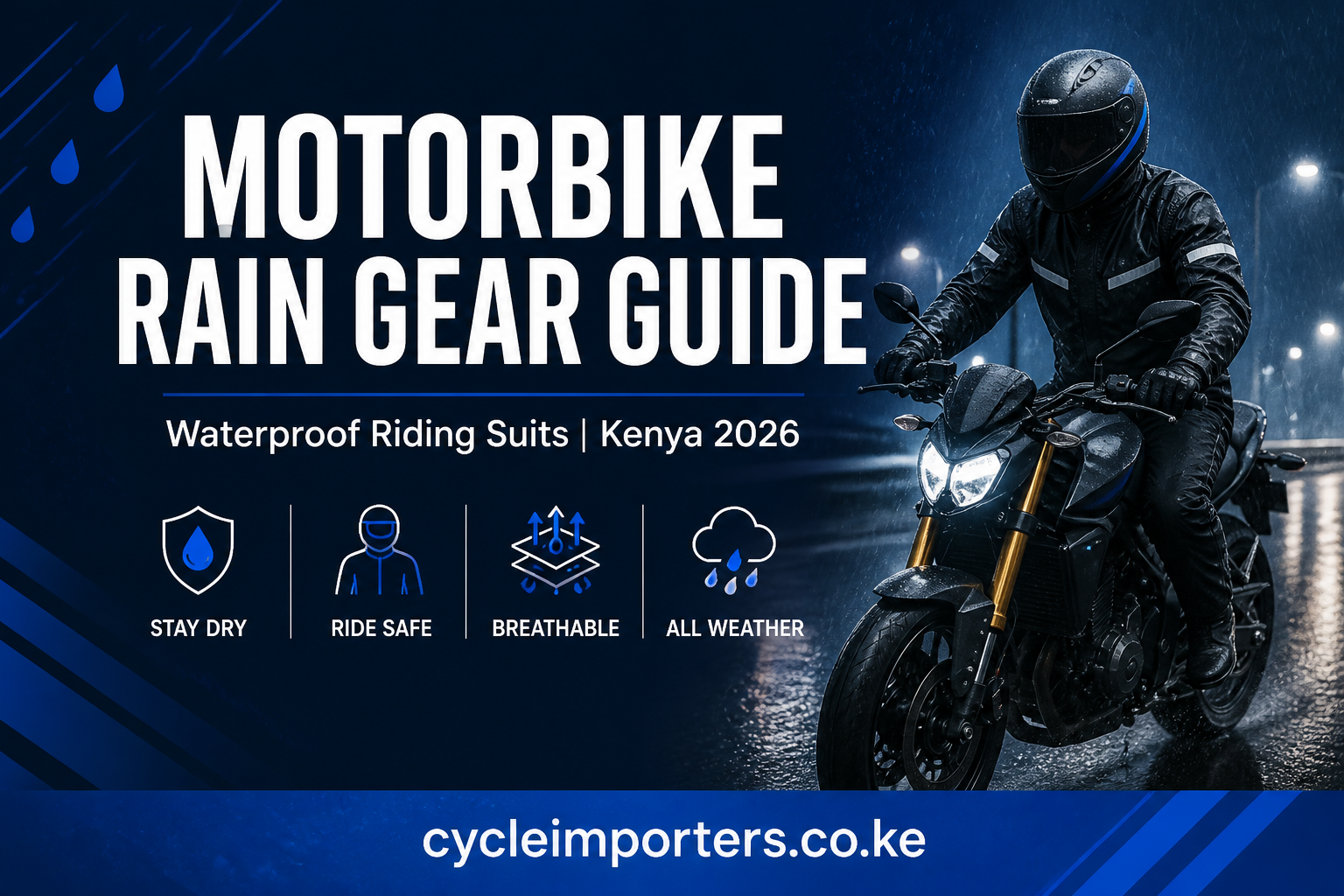
Motorbike Rain Gear in Kenya 2026: Stay Dry, Stay Safe on Every Ride
Your Complete Guide to Waterproof Riding Protection in East Africa's Toughest Weather
Introduction: Riding Through Kenya's Rainy Season
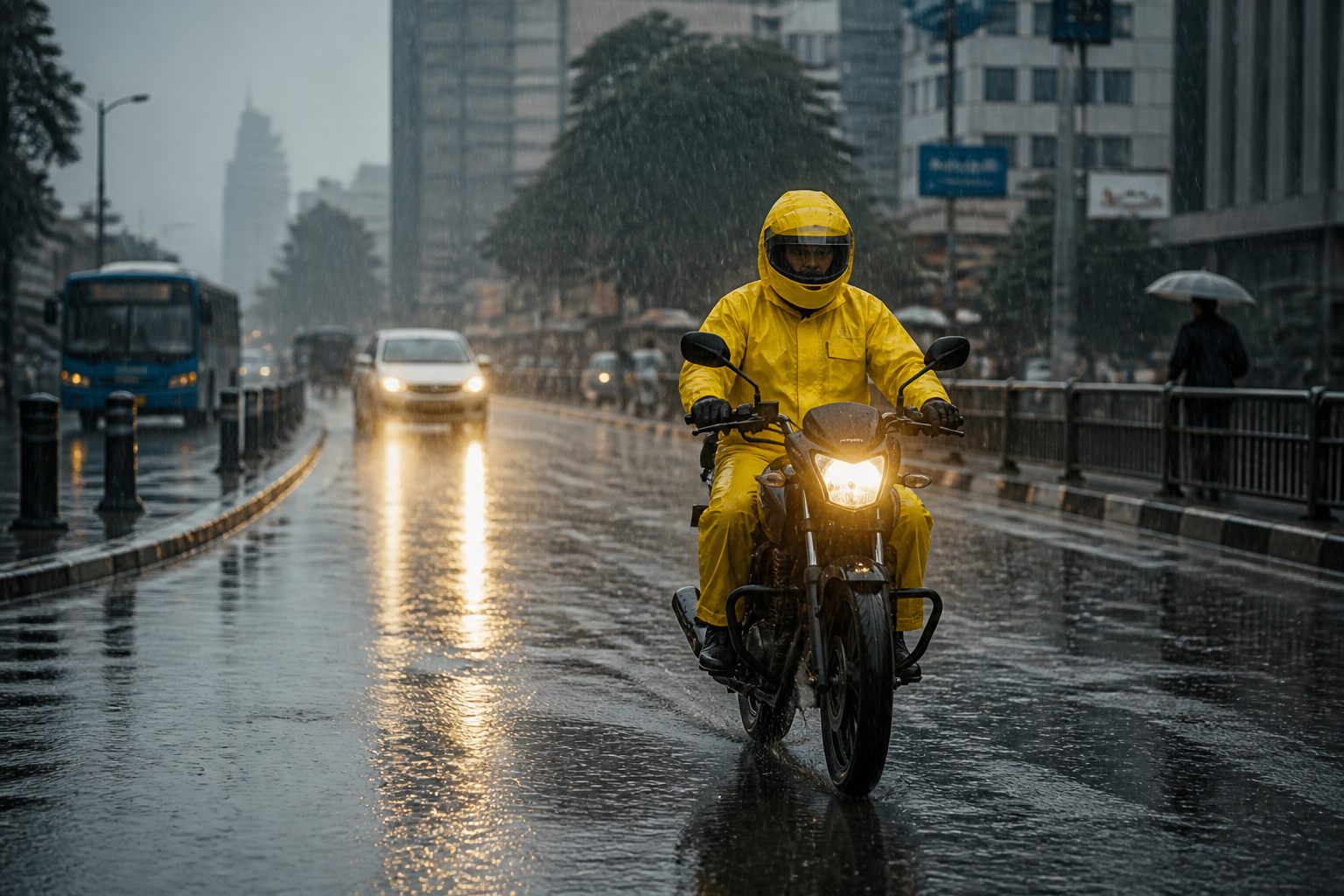
Kenya's weather is one of the most challenging environments for motorcycle riders on the continent. Whether you're a boda boda operator navigating Nairobi's congested streets during the long rains, a corporate delivery rider responsible for packages worth thousands of shillings, or an adventure enthusiast exploring Kenya's muddy rural routes, one truth remains universal: rain on two wheels is unavoidable.
Unlike car drivers who can pull over and wait out a downpour, motorcycle riders must face the elements head-on. The rains don't pause for traffic, and neither do your deliveries. Proper motorcycle rain gear isn't a luxury—it's a critical safety investment that protects your body, extends your bike's lifespan, and ensures your packages arrive dry.
According to motorcycle accident statistics across East Africa, wet weather conditions contribute to 35-40% of riding accidents, primarily due to reduced visibility, slippery surfaces, and rider discomfort affecting concentration. The solution? Quality waterproof gear that keeps you focused, comfortable, and visible in Kenya's most brutal weather.
Kenya's Two Rain Seasons: What Every Rider Needs to Know
Understanding Kenya's rain patterns is essential for planning your gear purchases and maintenance routines. The country experiences two distinct rainy seasons, each with unique characteristics that affect riding conditions differently.
The Long Rains: March to May (Peak Season)
The long rains are Kenya's most intense precipitation period, particularly in May when rainfall peaks. During these months, you'll encounter:
- Heavy, sustained downpours lasting 2-4 hours, not light drizzles
- Flooding in Nairobi's low-lying areas, particularly on routes to Industrial Area, Valley Road, and Waiyaki Way
- Flash floods on rural roads, creating dangerous mud tracks in minutes
- Reduced visibility with poor lighting conditions even during daytime
- Temperature drops to 15-18°C in Nairobi (very cold when moving at speed on a bike)
The Short Rains: October to November (Supplementary Season)
While shorter and less intense than the long rains, the short rains are unpredictable and sudden:
- Sudden tropical storms with little warning, turning dry roads to mud in minutes
- Peak rainfall in November, though intensity varies year to year
- Afternoon thunderstorms that catch afternoon delivery riders off-guard
- Higher accident risk due to riders caught without gear
| Metric | Long Rains (Mar-May) | Short Rains (Oct-Nov) | Dry Seasons |
|---|---|---|---|
| Average Monthly Rainfall | 180-220mm | 100-150mm | 20-40mm |
| Peak Rainfall Month | May (250mm+) | November (180mm) | N/A |
| Temperature Range | 18-24°C | 19-25°C | 22-28°C |
| Riding Condition | Heavy, sustained | Sudden, unpredictable | Dry, clear |
| Recommended Prep | Full waterproof suit + extras | Quick-access rain gear + visibility | Light protection, maintenance focus |
Pro tip for Nairobi riders: Check the Kenya Meteorological Department's weekly forecasts before the March-May and October-November seasons. Planning your delivery routes around predicted heavy rain can significantly reduce accident risk for corporate fleets.
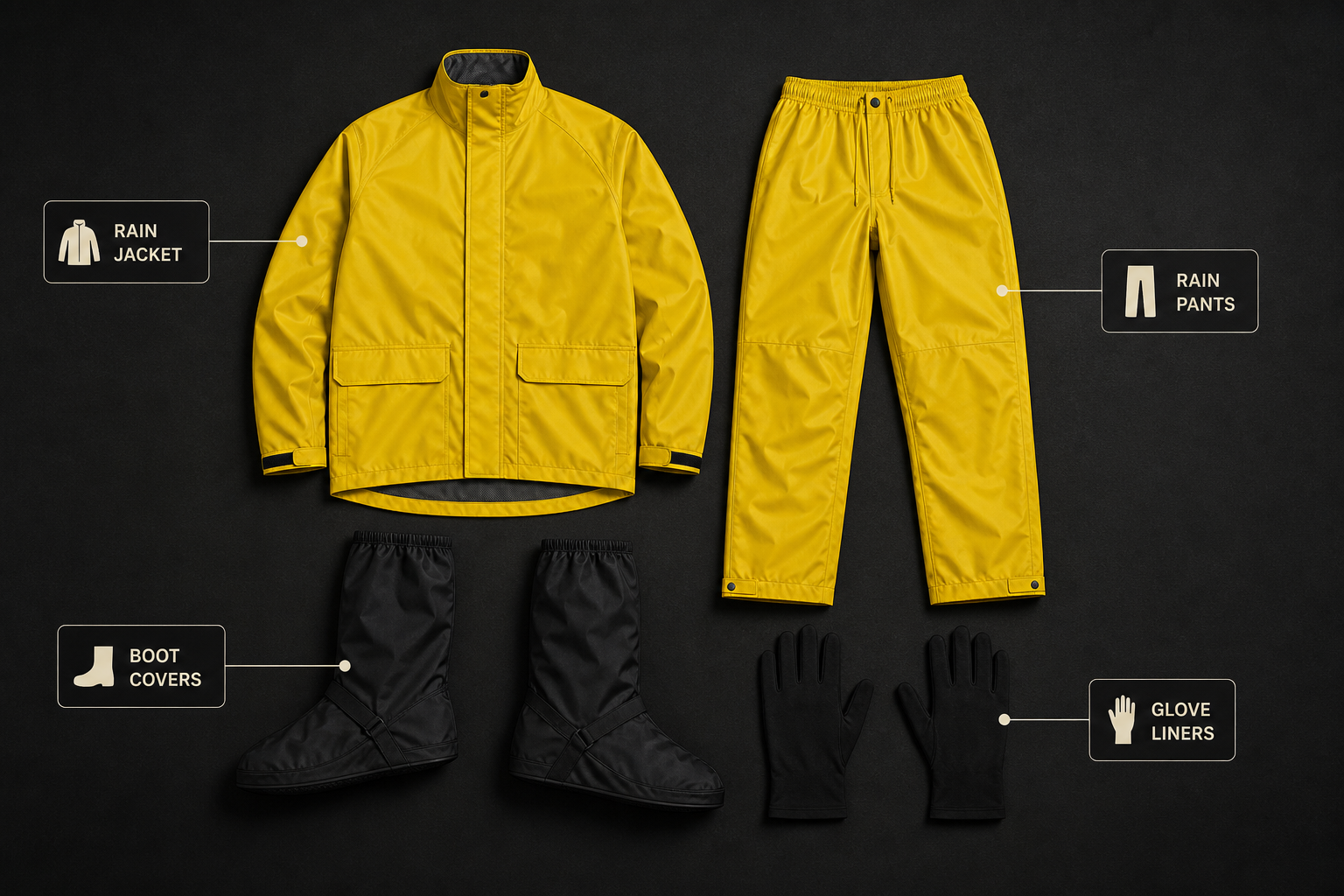
Complete Rain Gear Checklist for Kenyan Motorbike Riders
A proper rain setup isn't just a jacket—it's a complete system. Here's what every serious Kenyan motorcycle rider should have in their garage or vehicle:
✓ Waterproof Rain Jacket
- Overtop riding jacket or standalone
- High-visibility yellow/orange
- Sealed seams throughout
- Reflective strips for visibility
✓ Waterproof Rain Pants
- Full-length coverage
- Side zippers for easy removal
- Integrated boot covers or convertible
- Reinforced seams
✓ Waterproof Boot Covers
- Fitted to motorcycle boots
- Reflective detailing
- Durable, long-lasting material
- Easy slip-on design
✓ Waterproof Glove Liners
- Thin, touchscreen-compatible
- Fits inside riding gloves
- Keeps hands warm and dry
- Easy to remove when dry
✓ Protective Helmet Visor
- Anti-fog treatment
- Clear polycarbonate
- Easy to attach/remove
- Maintains visibility
✓ Waterproof Gear Bag
- For storage on the bike
- Sealed zippers
- Reflective exterior
- Compact, lightweight
Types of Motorcycle Rain Gear Explained
Not all rain gear is created equal. Understanding the different types helps you choose the right protection for your specific riding style and Kenya's climate.
1. One-Piece Rain Suits
What it is: A single integrated waterproof garment covering your entire body from neck to ankles.
Best for: Long-distance riders and those navigating heavy rain for extended periods.
Pros:
- Complete protection with minimal gaps
- Easier to put on/take off than two-piece
- Fewer seams to potentially leak
- Looks professional for corporate fleets
Cons:
- Must remove entirely to use bathroom (impractical for deliveries)
- Can feel restrictive during movement
- Harder to store in small spaces
Cost in Kenya: KES 4,500 - 8,000+ (quote-based through Cycle Importers)
2. Two-Piece Rain Suits (Jacket + Pants)
What it is: Separate waterproof jacket and pants that work together but can be worn independently.
Best for: Boda boda operators and delivery riders requiring flexibility and frequent stops.
Pros:
- Can remove just jacket for stops
- Greater flexibility during deliveries
- Easier to store in compact spaces
- Can be customized with company branding
Cons:
- More seams where water can enter if not sealed properly
- Requires proper overlap between jacket and pants
- Slight learning curve for proper layering
Cost in Kenya: KES 5,000 - 9,500+ (quote-based through Cycle Importers)
3. Rain Jacket Over Riding Jacket
What it is: A lightweight waterproof shell worn over your regular protective riding gear.
Best for: Riders who want maximum protection without removing their armored jacket.
Pros:
- Preserves armor protection underneath
- Easy to remove when rain stops
- Two-layer temperature regulation
- Minimal learning curve
Cons:
- Can be bulky when layered
- Less flexibility in movement
- May restrict ventilation in warm weather
Cost in Kenya: KES 3,500 - 6,500+ (quote-based through Cycle Importers)
4. Waterproof Boot Covers
What it is: Lightweight waterproof sleeves that slip over your riding boots.
Best for: Protecting feet from water splash and mud on Nairobi's flooded streets.
Pros:
- Affordable standalone protection
- Quick to put on/remove
- Keeps footpegs and shifter area dry
- Easy to store
Cons:
- Only protects feet and ankles
- Less durable long-term
- Can slip during heavy rain
Cost in Kenya: KES 800 - 1,800+ (quote-based through Cycle Importers)
5. Waterproof Gloves and Liners
What it is: Specialized gloves or thin liners worn under riding gloves to keep hands dry.
Best for: Cold, wet riding—essential for maintaining grip and control.
Pros:
- Prevents hand numbness from cold water
- Maintains throttle/brake grip
- Touchscreen-compatible options available
- Affordable critical component
Cons:
- Only protects hands
- Requires proper fitting
- Can reduce tactile feedback if poorly designed
Cost in Kenya: KES 600 - 1,200+ (quote-based through Cycle Importers)
What to Look for in Quality Rain Gear
Not all waterproof gear is equal. Kenya's climate—with extreme humidity, intense rain, and challenging terrain—demands high-quality construction. Here's what separates premium gear from cheap imitations:
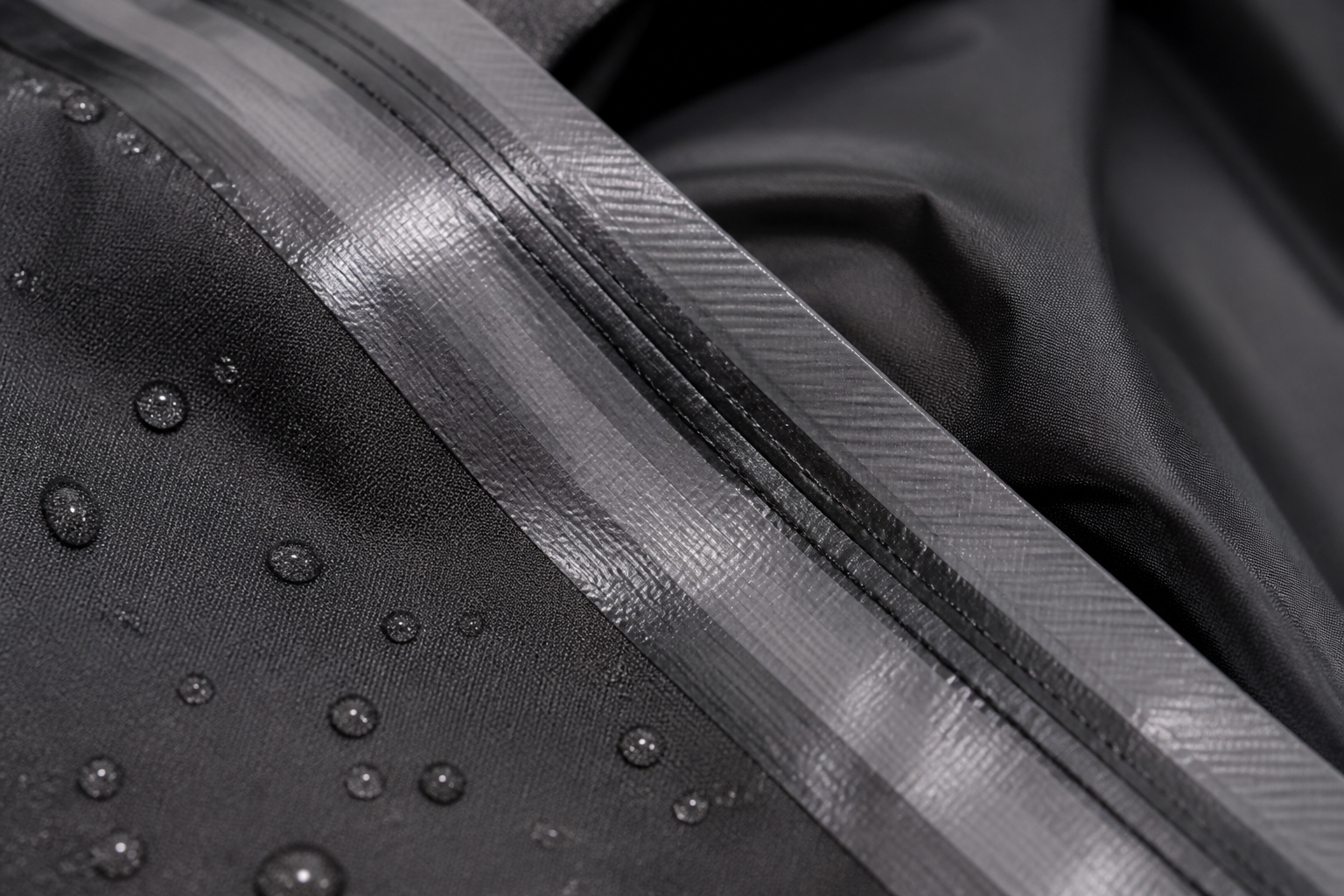
Sealed Seams
Why it matters: Seams are the weak point in any waterproof garment. Water naturally seeks the path of least resistance, and improper seams leak within months.
What to check: Look for taped seams or welded seams on the inside of the garment. Run your fingers along the seams—they should feel smooth and reinforced, not just stitched fabric. Ask the seller if seams are sealed; quality manufacturers always highlight this feature.
High-Quality Zippers
Why it matters: Zippers are operated hundreds of times and exposed to salt air (if coastal riding) and dirt. Poor zippers fail in 3-6 months in Kenya's environment.
What to check: Test zippers for smooth operation. Look for YKK or Riri branded zippers (industry standards). Check that zippers have overlapping flaps that prevent direct water spray onto the zip slider.
High-Visibility Colors and Reflective Materials
Why it matters: In Kenya's heavy rain, visibility is near zero. Drivers simply cannot see dark-colored riders during downpours. Reflective rain gear is literally life-saving.
What to check: Prioritize bright yellow, orange, or white rain gear. Ensure reflective strips run horizontally across the chest, back, and arms—not just tiny patches. High-quality reflective material remains visible even when wet.
Breathability and Ventilation
Why it matters: Kenya's humidity can reach 70-80% during rain seasons. Waterproof gear without ventilation becomes a sweat trap, causing discomfort and reducing visibility as visor fogs up.
What to check: Look for ventilation zippers under arms or back, or breathable membrane technology (premium feature). Ask if the material is breathable polyurethane or Gore-Tex equivalent, not solid rubber or plastic.
Sizing and Fit Over Armor
Why it matters: Rain gear that's too tight restricts movement and causes fatigue. Too loose and rain seeps in where gaps form.
What to check: When wearing your full protective riding gear underneath, the rain suit should still allow full arm extension. You should be able to grip the handlebars without shoulder strain. Wrist openings should be snug but not cutting off circulation.
Rain Gear for Boda Boda Riders: Practical Daily Use
Boda boda operators in Nairobi face unique challenges during rain season. You're making 10-20+ trips per day, dealing with passenger changes, navigating flooding, and maintaining income—rain can't stop you. This is where practical rain gear strategy matters most.
The Boda Boda Rider's Ideal Setup
- Two-piece rain suit: Allows you to remove the jacket during quick stops or when picking up passengers, then re-equip immediately
- High-visibility colors: Safety critical in Nairobi traffic, especially during reduced-visibility downpours
- Waterproof boot covers: Nairobi's flooded roads drench feet—boot covers prevent water from pooling in your shoes
- Waterproof glove liners: Keep hands dry for better grip on the throttle and brakes during emergency maneuvers
- Quick-dry capability: Look for gear that dries within 4-6 hours, allowing multiple uses in a single day
Storage and Accessibility
For daily boda boda use, your rain gear must be accessible. Many operators keep it in a waterproof bag mounted under the seat or in a compact backpack. The setup should allow you to:
- Put on full gear in under 2 minutes
- Access gear without dismounting the bike
- Keep gear semi-dry even when the bike is parked in rain
Cost Considerations for Daily Operators
For boda boda riders operating on thin margins, quality rain gear is an investment:
- Initial cost: KES 5,500 - 10,000 for a complete two-piece setup
- Lifespan: 1.5 - 2 years with daily use
- Payback period: Approximately 2-3 months (if rain gear prevents even one accident or injury)
- Insurance savings: Many insurers offer discounts for riders wearing safety gear
Corporate Fleet Rain Gear: Equipping Entire Delivery Teams
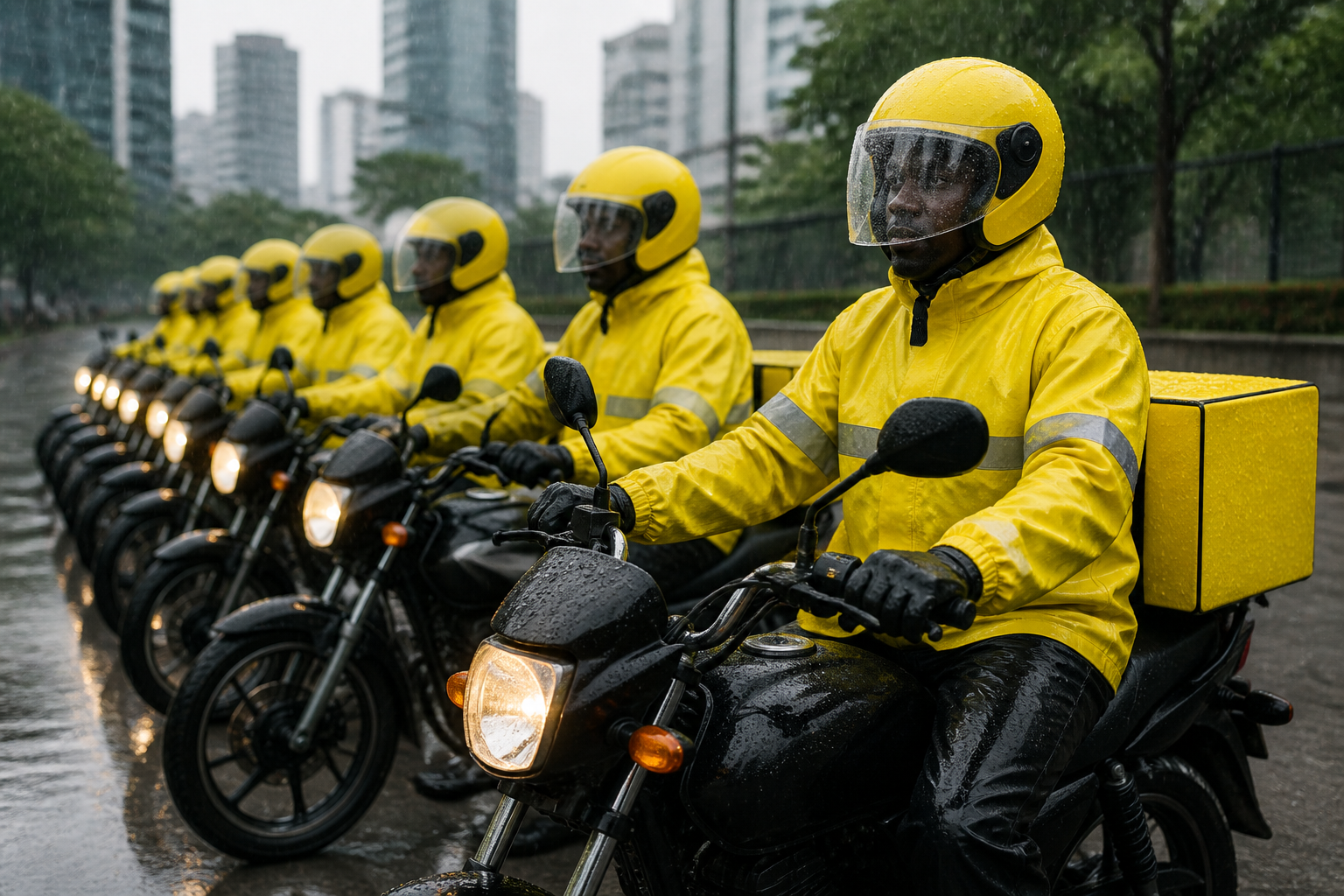
For delivery companies operating motorcycle fleets in Kenya, rain season presents operational challenges: reduced delivery capacity, increased accident rates, damaged packages, and lower employee retention due to rider discomfort. Quality rain gear solves all of these problems simultaneously.
Why Corporate Fleets Must Invest in Rain Gear
| Challenge | Without Rain Gear | With Quality Rain Gear |
|---|---|---|
| Accident Risk | 35-40% increase in rain | Reduced by 20-25% |
| Package Damage | 15-20% water damage rate | Less than 2% if gear + covers used |
| Delivery Speed | 60-70% reduction in rain | 85-90% maintained capacity |
| Employee Turnover | 25-35% during rain seasons | 5-10% (riders stay comfortable) |
| Insurance Claims | Higher premiums, frequent claims | Lower premiums, reduced incidents |
Fleet Implementation Strategy
Step 1: Assessment
Determine your fleet size and budget. A delivery company with 50 motorcycle riders needs to invest in quality gear that protects both the business and the riders.
Step 2: Bulk Procurement
Contact Cycle Importers for fleet quotes. Large orders (10+ units) qualify for volume discounts and can include:
- Custom color options (company branding)
- Bulk pricing on standardized gear
- Long-term payment plans
- Replacement guarantee for damaged gear
Step 3: Standardized Training
Ensure all riders understand:
- How to properly don and remove gear
- Maintenance and storage procedures
- When to use gear (not optional during rain)
- Inspection before each rain season
Step 4: Seasonal Preparation
Before March and October each year, inspect all fleet rain gear. Replace any damaged items, refresh reflective materials, and repair or replace zippers that are sticking.
Corporate ROI Calculation
For a delivery fleet of 50 riders:
- Investment: 50 units × KES 6,500 = KES 325,000
- Accident reduction: Prevent 3-5 accidents/year × KES 150,000 average cost = KES 450,000 - 750,000 saved
- Package protection: Reduce water damage by 15% = KES 200,000+ annual savings
- Productivity: Maintain 90% delivery capacity in rain (vs. 70%) = KES 300,000+ additional revenue
- Net annual ROI: 150-250% in year one
Corporate Fleet Rates Available
Cycle Importers specializes in outfitting delivery fleets across Kenya. Volume discounts available for 10+ units.
📱 Request Fleet Quote on WhatsApp 📞 Call For Fleet PricingSafety Visibility in the Rain: Why Reflective Rain Gear Saves Lives
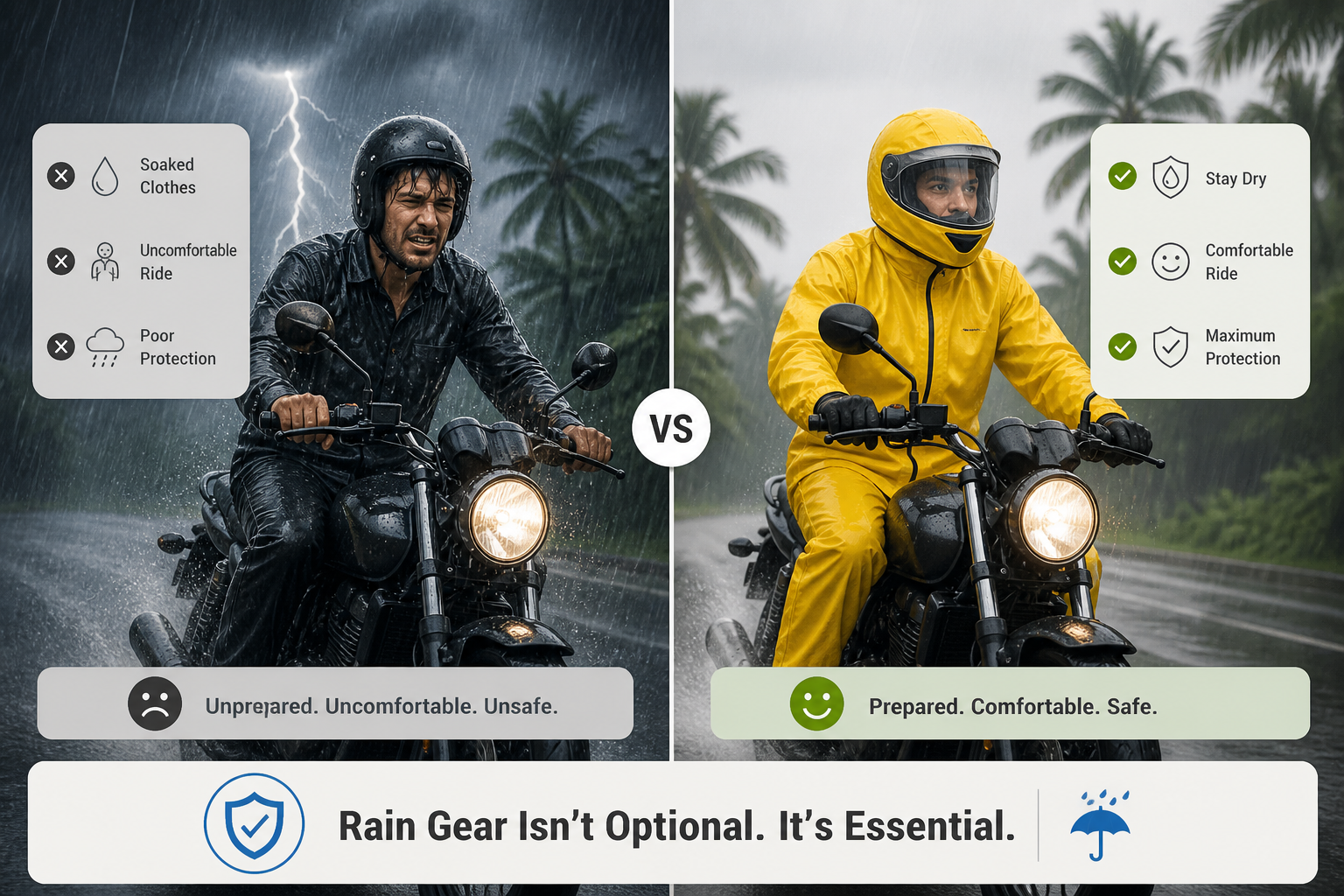
This is not exaggeration: During Kenya's heavy rains, visibility drops to 50-100 meters. Car drivers cannot see dark-colored motorcyclists. Accidents happen in seconds.
The Visibility Crisis in Kenya's Rain
Nairobi's infrastructure creates additional visibility challenges:
- Poor street lighting: Many roads have no streetlights; visibility depends entirely on vehicle headlights
- Dirty windshields and windows: Car drivers struggle to see past their own water-streaked windows
- Water spray from vehicles: Heavy-duty trucks create walls of water spray that obscure visibility completely
- Tunnel vision: Drivers focus on staying in their lane; motorcycles in peripheral vision go unseen
Reflective Rain Gear as Life Insurance
High-visibility yellow rain gear with reflective strips provides:
- 3x visibility increase compared to dark clothing (proven by road safety studies)
- Reflective strips that work even at night using vehicle headlights
- 360-degree visibility (front, back, and side visibility)
- Psychological effect: Drivers consciously register a bright rider and adjust accordingly
Premium rain gear includes:
- Horizontal reflective chest band (immediately visible from front)
- Back panel reflectivity (critical for rear-end accidents)
- Sleeve strips (visible when arms are extended, especially important when signaling)
- Pant leg reflectivity (for nighttime and poor visibility)
How to Layer: Rain Gear Over Riding Gear Correctly
Layering rain gear over your protective riding gear requires technique to maintain comfort, safety, and functionality. Here's the professional approach:
Optimal Layering Sequence (Bottom to Top)
Layer 1: Base/Moisture-Wicking Layer
- Cotton or synthetic blend undershirt
- Pulls moisture away from skin
- Keeps you warm even when damp
Layer 2: Protective Riding Jacket (Armored)
- Your primary protection against impact
- Should have shoulder, elbow, and back armor
- Remains under rain gear—do not remove
Layer 3: Rain Jacket (Lightweight Shell)
- Goes overtop the riding jacket
- Must fit snugly but not restrictively
- Zippers should align properly with under-jacket zippers
- Should have slightly longer sleeves to cover wrists
Layer 4: Rain Pants
- Goes overtop riding pants or jeans
- Should overlap the rain jacket by 2-3 inches
- Must not bunch up when seated on bike
Layer 5: Waterproof Boot Covers
- Slip over your riding boots
- Covers ankles and lower calf
- Seals the gap between pants and boots
Layer 6: Gloves
- Riding gloves go on first
- Waterproof liners underneath (or waterproof riding gloves over-top)
- Wrists should be covered by both rain jacket and glove
The Overlap Principle: Critical for Staying Dry
Water flows downward. This means:
- Rain jacket should overlap rain pants at the waist by at least 2 inches
- Rain pants should overlap boot covers by 2-3 inches
- Gloves should overlap jacket sleeves by 1-2 inches
Poor overlap = water seeping down gaps into your pants and boots. Proper overlap = water cascades down the outside without entering.
Movement and Flexibility Tests
Before heading out in heavy rain, test your layered setup in dry conditions:
- Full arm extension: Raise arms fully overhead—gear should move without restriction
- Throttle operation: Twist the handlebar grips—should feel natural without shoulder strain
- Braking: Practice braking motion—arms should bend comfortably
- Seated position: Sit on the bike—gear shouldn't bunch or ride up
- Low-speed maneuvers: Practice figure-8s in parking lot—ensure visibility isn't compromised
Drying and Maintaining Your Rain Gear in Nairobi's Humidity
Nairobi's climate—with relative humidity of 60-70% year-round and peaks of 80%+ during rain seasons—creates a perfect environment for mold, mildew, and waterproof coating degradation. Proper maintenance extends gear lifespan from 1 year to 2-3 years.
Immediate Post-Ride Care (Within 1 Hour)
Step 1: Remove and Air Dry
- Take off rain gear immediately upon arrival
- Do NOT store wet gear in a backpack or bag
- Hang on a clothes rack or hook in a well-ventilated area
- Allow at least 2-3 hours of air circulation before storage
Step 2: Wipe Down
- Use a soft, lint-free cloth to wipe exterior
- Remove dirt and debris from seams
- Check for any damage (tears, zipper issues)
Step 3: Leave Zippers Open
- Keep all zippers, velcro, and snaps open while drying
- Allows internal moisture to evaporate
- Prevents mold growth inside gear
Weekly/Monthly Maintenance
Weekly (During Rain Season)
- Inspect seams for any signs of water seeping
- Check zippers for smooth operation
- Wipe down with dry cloth before storage
Monthly
- Deep clean exterior with gentle soap and water
- Dry completely (24+ hours in well-ventilated space)
- Apply waterproof sealant spray (check if your material requires this)
- Test seams by spraying with water—ensure no leaking
Storage During Dry Seasons
Before storing (June-September and December-February)
- Thoroughly clean and dry gear
- Ensure zippers are fully functional and lubricated
- Inspect seams for any damage
Storage location
- Cool, dry place with low humidity (below 50%)
- Away from direct sunlight (UV degrades waterproof coatings)
- In a storage bag or container with silica gel packets
- Not in a tightly sealed plastic bag (prevents air circulation)
Humidity Control in Nairobi Apartments
Nairobi's high humidity makes moisture control critical:
- Use silica gel packets or moisture-absorbing bags in storage containers (refresh monthly)
- Store gear in a well-ventilated closet, not a sealed storage box
- Consider a small dehumidifier if storing in a basement or enclosed room (cost: KES 3,000-5,000)
- Inspect gear every 2 months even during dry season for signs of mold
Frequently Asked Questions About Motorcycle Rain Gear in Kenya
Q: What is the best rain gear for daily boda boda riders in Kenya?
For daily boda boda riders, a two-piece rain suit (waterproof jacket and pants) offers the best balance of protection, breathability, and comfort. Pair it with waterproof boot covers and glove liners. Two-piece suits allow easier removal during stops while maintaining protection. Look for high-visibility colors for safety in poor weather visibility. A complete setup costs KES 5,500-10,000 through Cycle Importers.
Q: When is rain season in Kenya and how should I prepare?
Kenya has two main rain seasons: Long rains (March-May) and Short rains (October-November). Nairobi receives an average of 860mm annually, with May and November being peak months. Riders should ensure rain gear is ready before these seasons, particularly April-May and October-November. Invest in quality gear before the season starts, inspect it for damage, and keep it stored in a dry location with silica gel during dry seasons.
Q: Can I wear rain gear over my riding jacket?
Yes, rain jackets can be worn over riding jackets, but ensure the rain jacket is appropriately sized to fit comfortably over your armored gear without restricting movement. This two-layer approach provides excellent protection and maintains your body armor underneath. Make sure both zippers work smoothly and visibility is not compromised by bulky layering.
Q: How do I maintain motorcycle rain gear in Nairobi's humid climate?
After each use in rain, wipe down your gear with a soft cloth and hang it in a well-ventilated area away from direct sunlight. Never store wet gear in bags. Nairobi's high humidity (60-70% annually) requires good air circulation. Inspect zippers, seams, and waterproof coatings monthly. Store in a cool, dry place with silica gel packets to absorb moisture. During dry seasons, use a storage container with moisture-absorbing packets and keep it in a well-ventilated closet.
Q: Is waterproof rain gear suitable for corporate fleet riders?
Absolutely. Quality motorcycle rain gear is ideal for corporate delivery fleets. Proper rain protection reduces accidents during downpours, protects packages from water damage, and increases rider comfort and retention. Corporate fleet managers can purchase bulk quantities and customize gear with company colors. Rain-prepared riders have better focus and reaction times, reducing insurance claims by 20-25% and improving delivery capacity from 70% to 90% during rain seasons.
Conclusion: Your Rain Season is Now Protected
Kenya's rain seasons are unavoidable, but their consequences don't have to be. Whether you're a boda boda operator fighting Nairobi traffic in downpours, a delivery rider protecting packages worth thousands, or a corporate fleet manager responsible for rider safety, quality motorcycle rain gear is non-negotiable.
The investment is modest—KES 5,500-10,000 for a complete two-piece setup—but the returns are massive: reduced accidents, protected packages, maintained delivery capacity, extended motorcycle lifespan, and most importantly, your personal safety.
Every single ride in Kenya's rain is a gamble without proper protection. Don't gamble. Equip yourself and your team with quality waterproof rain gear before the next downpour hits.
Get your motorcycle rain gear from Cycle Importers today—Kenya's trusted supplier of riding gear for serious riders.
Order Your Motorcycle Rain Gear Today
Individual riders, boda boda operators, and corporate fleets trust Cycle Importers for quality rain gear backed by local expertise.
Cycle Importers Ltd | Nairobi, Kenya
Specializing in Quality Motorcycle Gear & Accessories
WhatsApp: +254720283468 | Call: +254720283468
Website: https://cycleimporters.co.ke