Motorbike Spare Parts in Kenya 2026
What to Buy, What to Avoid & Where to Source Quality Parts
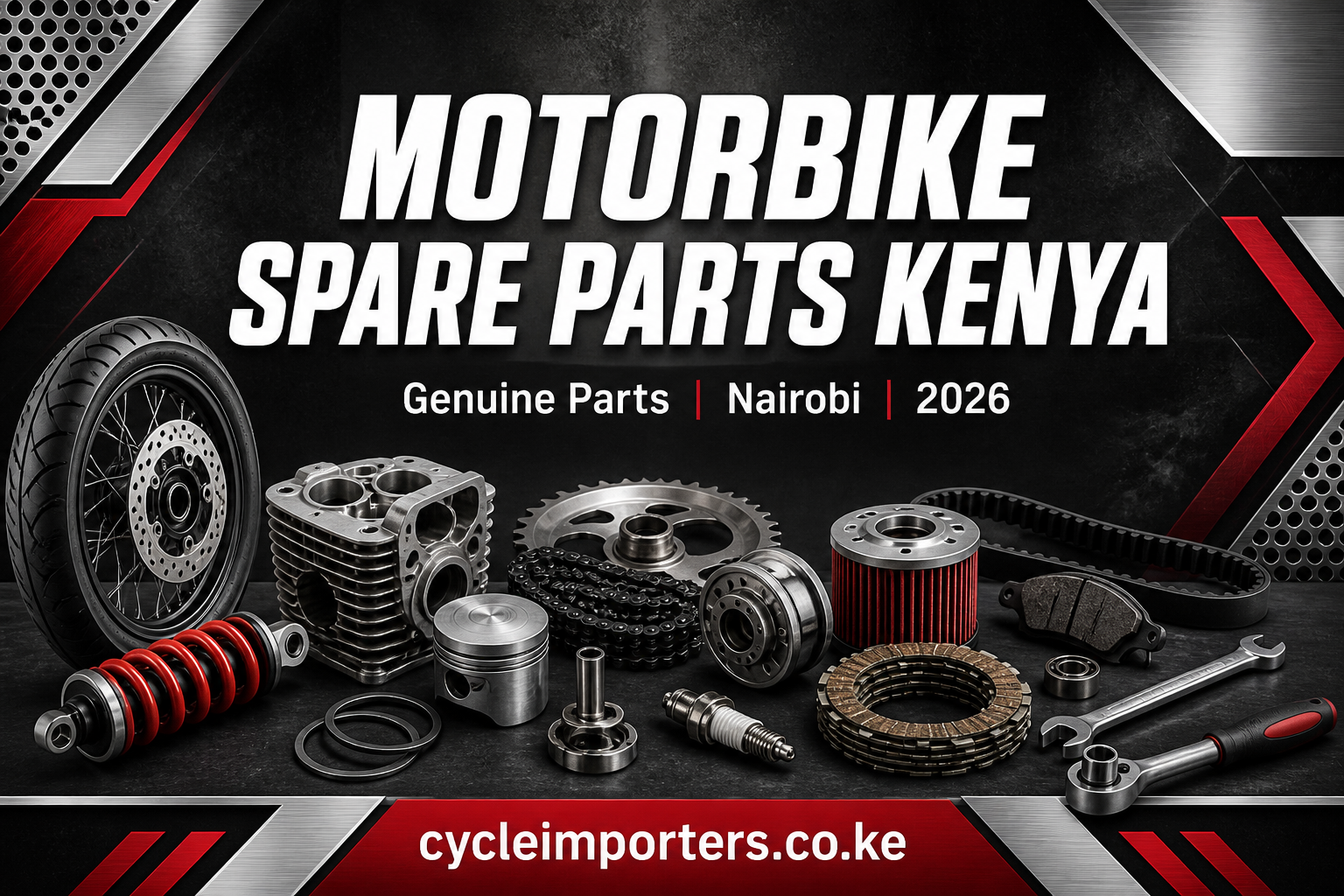
The Spare Parts Crisis Facing Kenyan Motorbike Riders
Keeping a motorbike running in Kenya isn't just about having fuel and basic mechanical knowledge—it's about access to genuine, reliable spare parts. Whether you're a boda boda operator running a daily fleet, a countryside delivery rider, or an individual motorcycle enthusiast, one reality is unavoidable: the quality of spare parts you use directly impacts your safety, fuel efficiency, and maintenance costs.
The problem? Kenya's spare parts market is fragmented. Walk down Kirinyaga Road in Nairobi, and you'll find hundreds of vendors selling motorcycle components. But here's the hard truth: an estimated 60-70% of spare parts in the Kenyan market are counterfeit or substandard. These cheap knockoffs look similar to genuine parts but fail prematurely, costing you more money, time, and potentially your safety.
This comprehensive guide walks you through everything a Kenyan motorbike rider needs to know about spare parts—from identifying genuine components to understanding replacement schedules, sourcing reliable suppliers, and managing bulk fleet parts. By the end, you'll know exactly what to buy, what to avoid, and where to get quality parts without breaking the bank.
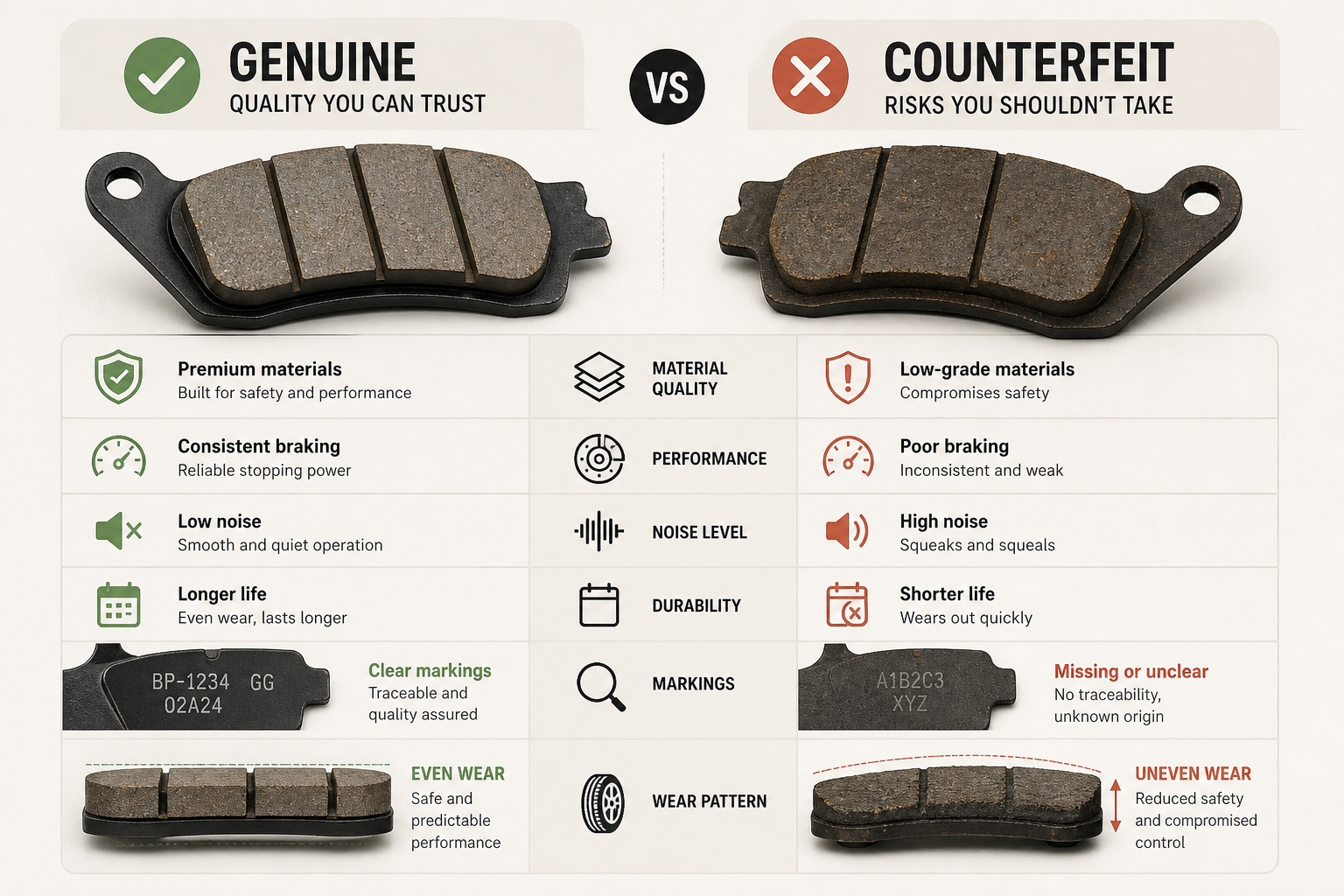
Counterfeit parts often look similar but fail much faster than genuine components
The 10 Most Critical Spare Parts Every Kenyan Rider Should Know
Not all spare parts are equally important. Some fail frequently and are inexpensive; others last longer but are critical for safety. Here are the 10 parts every Kenyan motorbike rider should prioritize:
1. Spark Plugs
Why it matters: Worn spark plugs cause poor fuel economy, difficulty starting, and reduced power. They're cheap but critical.
Replacement: Every 2,000-3,000 km or 3 months (whichever comes first)
Cost range: KES 500-2,000 for genuine parts
2. Air Filters
Why it matters: Dirty air filters reduce engine performance and fuel economy by up to 20%.
Replacement: Every 5,000-8,000 km or when visibly dirty
Cost range: KES 800-2,500
3. Oil Filters
Why it matters: Protect your engine from wear by filtering out debris. Skipping this is engine suicide.
Replacement: Every oil change (5,000-8,000 km)
Cost range: KES 400-1,500
4. Brake Pads & Shoes
Why it matters: Your life depends on effective brakes. Worn pads reduce stopping power and damage rotors.
Replacement: Every 10,000-15,000 km or when worn to 2mm thickness
Cost range: KES 2,000-5,000 per set
5. Drive Chain
Why it matters: A worn chain causes power loss, speed wobbles, and can break suddenly.
Replacement: Every 15,000-20,000 km or when slack exceeds 5cm
Cost range: KES 3,000-8,000
6. Sprockets (Front & Rear)
Why it matters: Work with the chain for power delivery. Worn sprockets damage new chains quickly.
Replacement: Every 25,000-30,000 km, usually with chain
Cost range: KES 2,000-4,000 per sprocket
7. Engine Oil
Why it matters: The lifeblood of your engine. Poor quality oil accelerates wear.
Replacement: Every 5,000-8,000 km
Cost range: KES 1,200-3,500 per liter
8. Brake Fluid
Why it matters: Absorbs moisture over time, reducing brake responsiveness. Safety critical.
Replacement: Every 2 years or 20,000 km
Cost range: KES 1,500-4,000 per bottle
9. Battery
Why it matters: A dead battery leaves you stranded. Quality matters for reliability.
Replacement: Every 2-3 years depending on usage
Cost range: KES 4,000-12,000
10. Tyres & Tubes
Why it matters: Your only contact with the road. Worn tyres cause accidents and fuel waste.
Replacement: When tread depth drops below 1.6mm
Cost range: KES 3,000-15,000 per tyre (depends on quality and size)
Genuine vs Counterfeit Parts: How to Tell the Difference in Kenya
This is where most Kenyan riders lose money. Counterfeit parts are manufactured in factories designed to mimic genuine components but cut corners on materials, quality control, and durability. Here's how to spot them:
8 Signs You're Looking at Counterfeit Parts
- Poor packaging: Genuine parts come in branded boxes with consistent printing quality. Counterfeit packaging has blurry text, spelling errors, or inconsistent colors.
- Missing serial numbers: Most genuine OEM parts have traceable serial numbers. If you can't verify it online with the manufacturer, be suspicious.
- Suspiciously cheap prices: If a "genuine" Kawasaki spark plug costs 40% less than other vendors, it's fake. Genuine parts have consistent pricing within 10-15%.
- Loose or misaligned parts: Counterfeit components often have loose fittings, poor alignment, or visible casting defects. Hold the part up to light and inspect for gaps.
- No seller accountability: Legitimate dealers provide warranties (typically 3-12 months). If a seller won't guarantee their parts, walk away.
- Wrong part fitment: Counterfeit parts often don't fit correctly. A "universal" brake pad that fits every bike is usually not genuine.
- Unusual smell or color: New rubber or plastic parts should smell slightly industrial. Fake parts often have chemical or metallic odors indicating different material composition.
- Rapid failure after installation: If a part fails within weeks of normal use, it's likely counterfeit. Keep receipts for warranty claims.
Spare Parts Replacement Schedule: When to Change What
Keeping track of maintenance schedules prevents costly repairs. Use this table as your reference guide:
| Component | Replace Every | Signs It's Due for Replacement | Approx. Cost (KES) |
|---|---|---|---|
| Spark Plug | 2,000-3,000 km / 3 months | Difficult starting, rough idle, reduced power, excessive black smoke | 500-2,000 |
| Air Filter | 5,000-8,000 km | Visible dirt/dust, reduced power, increased fuel consumption | 800-2,500 |
| Oil Filter | 5,000-8,000 km (with oil change) | High oil pressure warning, metallic particles in oil | 400-1,500 |
| Engine Oil | 5,000-8,000 km | Dark/black color, burnt smell, low oil level | 1,200-3,500 per liter |
| Brake Pads (Front) | 10,000-15,000 km | Brake squeal, reduced braking power, lever feels spongy | 2,000-5,000 |
| Brake Shoes (Rear) | 12,000-18,000 km | Soft brake pedal, grinding noise, brake fade | 1,500-3,500 |
| Brake Fluid | 24 months or 20,000 km | Spongy brake feel, moisture in fluid (checked during service) | 1,500-4,000 |
| Drive Chain | 15,000-20,000 km | Slack exceeds 5cm, chain noise, power loss, wobbling | 3,000-8,000 |
| Front Sprocket | 25,000-30,000 km | Teeth worn/hooked, chain skipping, noise | 2,000-4,000 |
| Rear Sprocket | 25,000-30,000 km | Teeth worn/hooked, chain skipping, poor acceleration | 2,000-4,000 |
| Battery | 24-36 months | Slow cranking, dim lights, swollen case, no hold charge | 4,000-12,000 |
| Tyre | When tread < 1.6mm or after 30,000-40,000 km | Visible tread wear, bulges, cuts, reduced grip in wet | 3,000-15,000 |
Not sure about your schedule? Our servicing team can create a customized maintenance plan for your bike.
📋 View Our Servicing OptionsSourcing Spare Parts in Kenya: What to Look For
Kenya's spare parts market has come a long way, but you still need to be strategic about where you buy. Here's how to navigate it:
The Kirinyaga Road Challenge
Kirinyaga Road in Nairobi is famous for motorcycling—it's where you'll find everything from spare parts to full bikes. But here's the reality: convenience doesn't equal quality. While some legitimate dealers operate on Kirinyaga Road, the market is notorious for mixed inventory where genuine parts sit next to counterfeits on the same shelf. The advantage? Competitive pricing if you know how to negotiate. The disadvantage? You need technical knowledge to verify authenticity on the spot.
Where Should You Actually Buy?
- Authorized Dealers (Recommended): These are official representatives of motorcycle brands like Kawasaki. They stock genuine OEM parts, provide warranties, and offer technical support. Prices are higher but reliability is guaranteed.
- Established Independent Shops: Family-run or well-known motorcycle shops that have been operating for 5+ years, have physical storefronts, and provide warranties. Many have good reputations in their local areas.
- Online Platforms: Emerging e-commerce platforms specializing in motorcycle parts are growing in Kenya. Advantages include transparency, customer reviews, and delivery. Check seller ratings before purchasing.
- Wholesale Distributors: If you're buying in bulk (for a fleet), directly contacting motorcycle distributors can offer better pricing than retail shops.
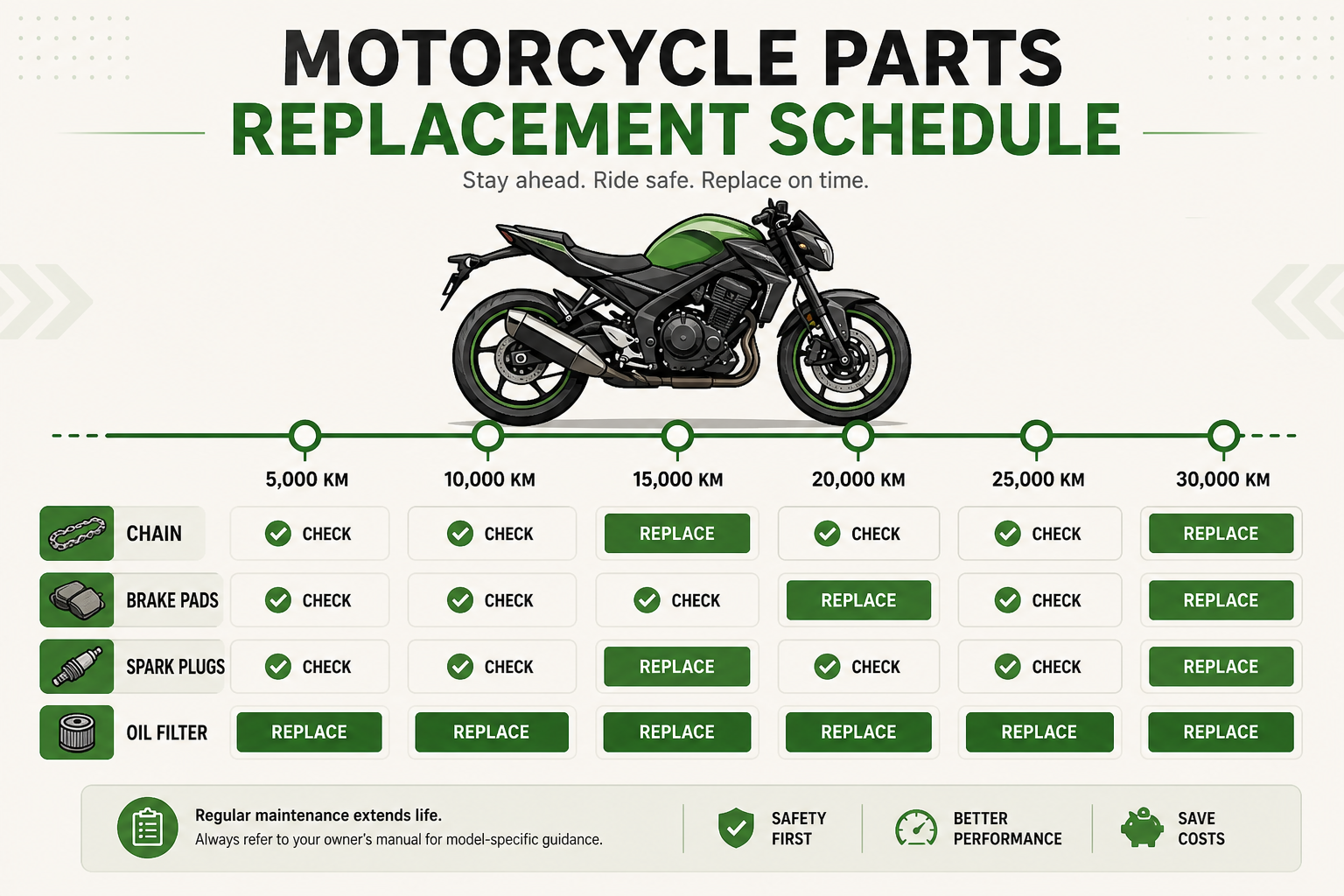
Maintenance timeline showing when to replace critical components
KLX 230SE & Senke 150cc: Parts Guide for Cycle Importers' Bikes
If you own a Kawasaki KLX 230SE or Senke 150cc, you're in luck—both are popular bikes in Kenya with good spare parts availability. Here's what you need to know:
Kawasaki KLX 230SE Specific Parts
The KLX 230SE is a reliable, fuel-efficient bike trusted by delivery riders and enthusiasts across Kenya. Key characteristics for parts selection:
- Liquid Cooling System: Unlike air-cooled bikes, the KLX uses coolant. Keep quality coolant in stock and check levels every month.
- Fuel Injected Engine: More reliable spark plug ignition but requires regular fuel filter changes (every 10,000-15,000 km).
- Single Cylinder, 230cc: Powerful but requires quality air and oil filters for optimal performance.
- Chain-Driven Power: The transmission chain is critical—use genuine Kawasaki chain and sprockets for best reliability.
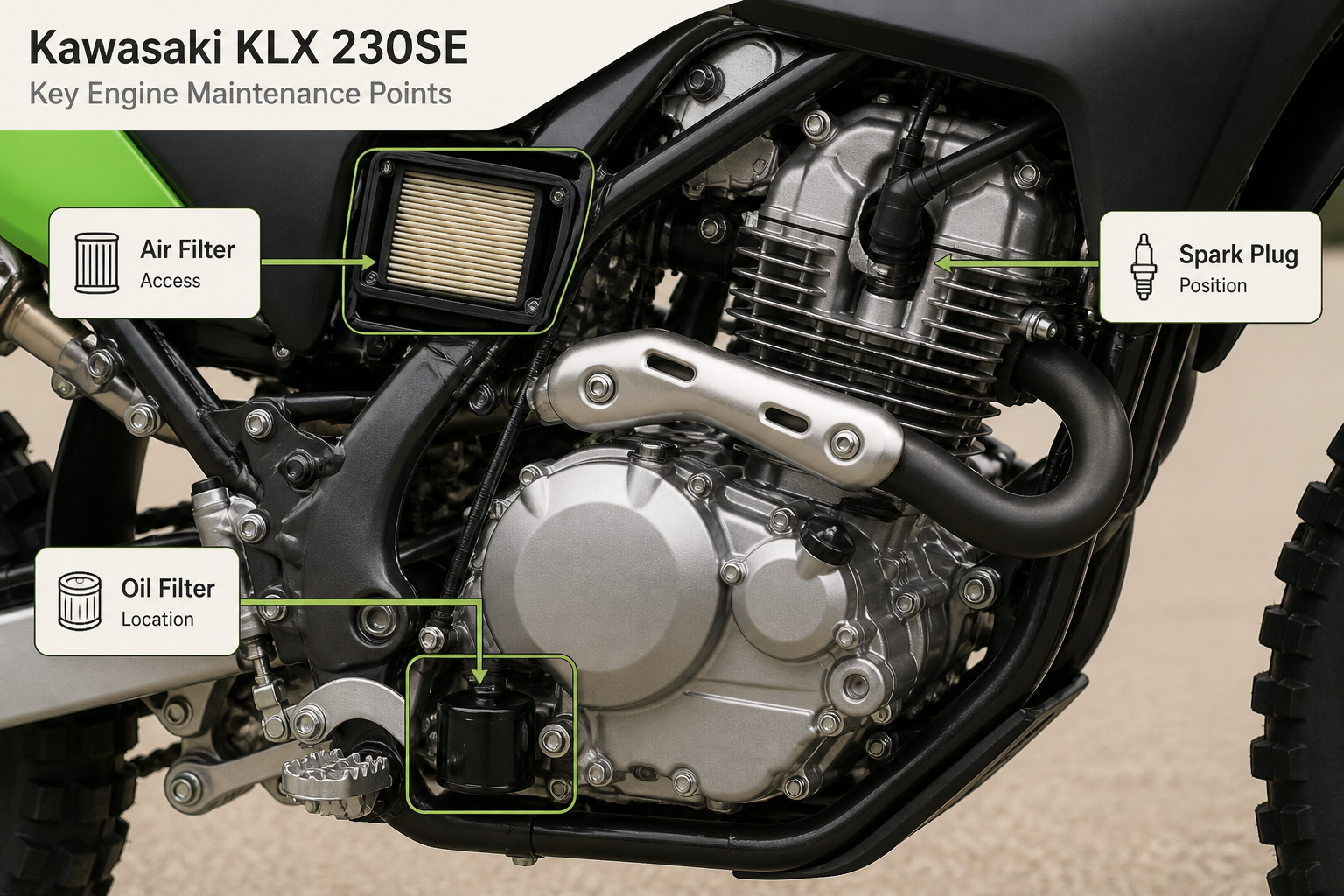
Key maintenance points on the KLX 230SE engine
Senke 150cc Specific Parts
The Senke 150cc is an affordable, durable commuter bike popular with boda boda operators. Parts considerations:
- Air-Cooled Engine: Simpler cooling but requires excellent ventilation. Keep engine fins clean.
- Carburetor Design: Requires regular carburetor cleaning and jets replacement. Quality fuel filters prevent carburetor clogging.
- High Torque Output: The 150cc produces good power—use high-quality brakes and suspension parts.
- Cost-Effective Parts: Senke parts are generally cheaper than Kawasaki, but quality varies widely. Stick with proven suppliers.
Fleet Spare Parts Management: Keeping 10-50 Bikes Running
If you manage a fleet of motorbikes (boda boda operators, delivery services, rental companies, security services), managing spare parts is a business-critical function. Here's how to do it efficiently:
Why Fleet Parts Management Matters
Downtime is expensive. For every bike out of service, you lose revenue, disappoint customers, and risk losing contracts. A strategic spare parts inventory reduces downtime from days to hours.
The Fleet Parts Strategy
- Create a Parts Stock Matrix: Categorize parts by:
- Consumables (frequent, low-cost): spark plugs, filters, oil
- Regular Wear Items (predictable, medium cost): brake pads, chains
- Occasional Parts (unpredictable, high-cost): batteries, alternators
- Set Par Levels: For a 20-bike fleet, you might stock:
- 50 spark plugs (2.5 per bike)
- 30 air filters (1.5 per bike)
- 20 oil filters (1 per bike)
- 10 sets of brake pads (0.5 per bike)
- Establish a Preventive Schedule: Service every 5,000-8,000 km, not when parts fail. Preventive maintenance costs 30-40% less than emergency repairs.
- Build Supplier Relationships: Partner with a single trusted supplier for bulk discounts (typically 10-20% for regular fleet orders), priority stock access, and credit terms.
- Track Everything: Use a simple spreadsheet (or WhatsApp checklists) to log:
- Bike ID / Registration number
- Parts installed / date
- Kilometers at service
- Next service date
Sample Fleet Maintenance Schedule
| Service Interval | Action Items | Parts Needed |
|---|---|---|
| Every 5,000 km | Oil & oil filter change, inspect chain, check brakes | Engine oil, oil filter, chain lube |
| Every 10,000 km | Air filter check, brake pad inspection, spark plug check | Air filter, spark plug (if needed) |
| Every 15,000 km | Brake pads replacement, chain tension adjustment | Brake pads, chain link (if needed) |
| Every 20,000 km | Full brake inspection, coolant check (liquid-cooled), battery test | Brake fluid (if needed), coolant top-up |
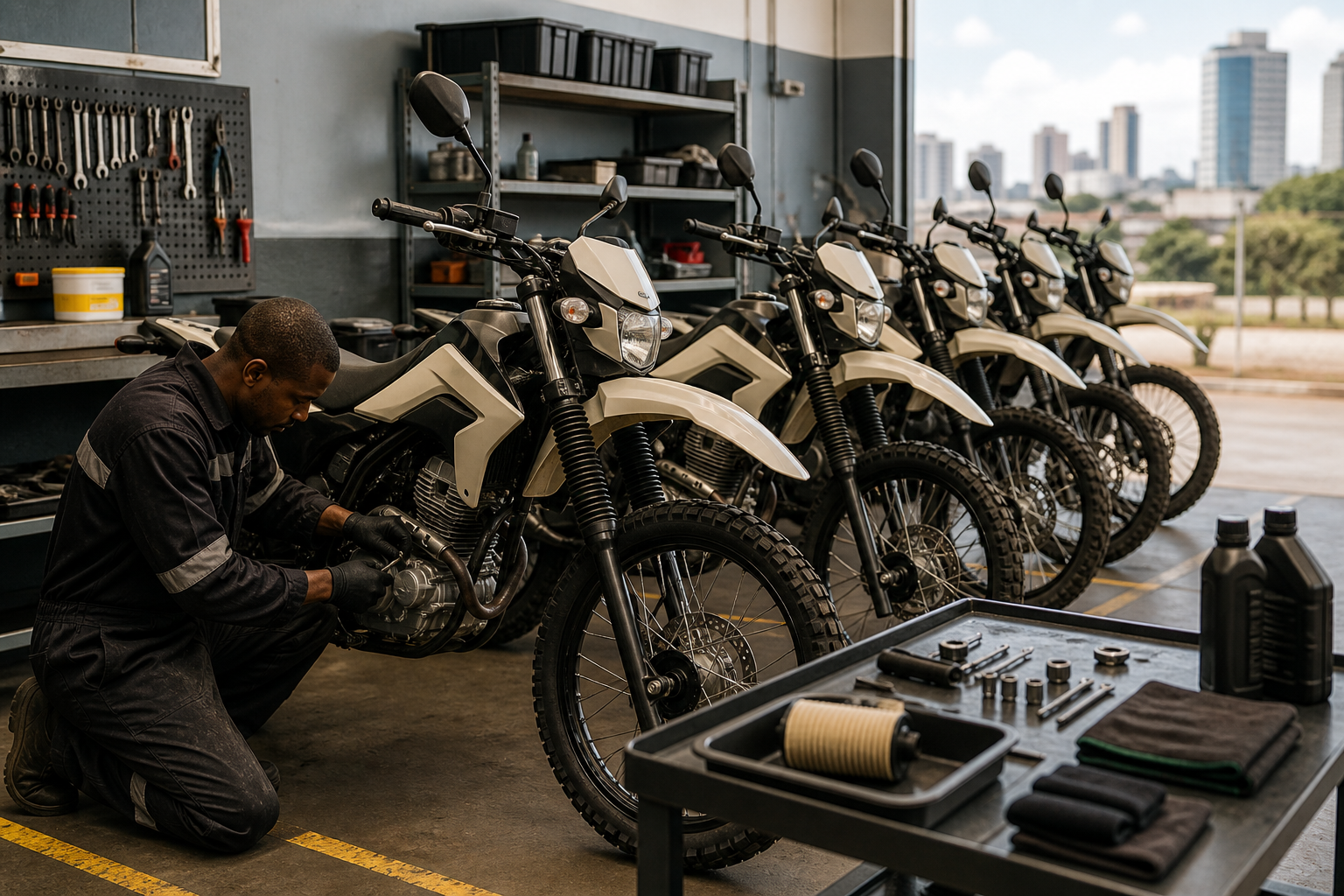
Fleet maintenance in progress - organized and systematic
How to Order Spare Parts from Cycle Importers
Ordering parts from Cycle Importers is straightforward, whether you need one spark plug or a bulk fleet order:
Step-by-Step Process
- Identify Your Bike Model: Have your bike's make, model, and year handy (e.g., Kawasaki KLX 230SE or Senke 150cc)
- Check Online Inventory: Browse our Spare Parts page to see current stock
- Contact Us for Availability: If you don't see what you need, WhatsApp or call to confirm stock and availability
- Request a Quote: For items not in inventory, we provide quotes within 24 hours
- Payment & Delivery: Multiple payment options available. Local delivery or pickup available.
- Installation Support: If you need help, our servicing team can assist. See details on our Servicing page
🎯 Get Quotes for Parts Not in Inventory
Don't see what you need? We can source it for you. Send us the part name, bike model, and quantity.
📱 Request a Quote on WhatsApp 🔗 Request Bulk Parts Quote💬 Have questions about specific parts? Our team is ready to help.
WhatsApp: +254720283468 Call: +254720283468Tyres as Spare Parts: Never Compromise
Tyres deserve special mention because they're literally where your bike meets the road. Everything else works fine, but worn tyres will kill you faster than any counterfeit spark plug.
Why Tyre Quality Matters More Than You Think
- Safety: Worn tyre tread cannot grip wet roads. In Kenya's rainy season, this is deadly.
- Fuel Economy: Worn or low-pressure tyres increase rolling resistance by 15-20%, burning more fuel.
- Suspension Wear: Riding on bad tyres transfers extra shock to your suspension, accelerating wear on shocks and springs.
- Speed and Control: Bald tyres cannot handle cornering forces, especially on uneven Kenyan roads.
Tyre Recommendations for Kenya
Vee Rubber is the recommended tyre brand for motorbikes in Kenya—they're designed for our road conditions, climate, and riding style. Available at Cycle Importers and other authorized dealers.
Replacement frequency: When tread depth reaches 1.6mm (use the coin test: insert a 1 Kenyan Shilling coin into the tread groove—if you can see the top of the coin, replace the tyre). This typically happens every 30,000-40,000 km depending on riding style and road conditions.
Cost consideration: Yes, quality tyres cost more upfront. A genuine Vee Rubber tyre might cost 50% more than a cheap knockoff. But the knockoff will wear out twice as fast, puncture more frequently, and put your life at risk. The math strongly favors genuine tyres.
Inquire About Tyres
Frequently Asked Questions About Motorbike Spare Parts in Kenya
Conclusion: Your Motorbike Spare Parts Checklist
Sourcing genuine spare parts in Kenya requires knowledge, patience, and a bit of skepticism. But the investment pays dividends: a well-maintained bike is reliable, fuel-efficient, and safe. Whether you're a individual rider or managing a fleet, remember these key takeaways:
- Always buy genuine OEM parts for safety-critical components (brakes, suspension, tyres)
- Build a relationship with one trusted supplier who understands your bike and needs
- Follow manufacturer replacement schedules, not wait-until-it-breaks logic
- Keep a stock of consumables (filters, oil, spark plugs) at home for emergencies
- Verify part authenticity before purchase—ask for serial numbers, warranties, and pricing consistency
- For fleet operations, implement preventive maintenance, not reactive repairs
- Invest in quality tyres—they're your connection to the road and your life insurance
Ready to Stock Up?
Cycle Importers stocks genuine, verified spare parts for Kawasaki KLX 230SE, Senke 150cc, and other popular motorbikes in Kenya. Whether you need a single spark plug or a bulk fleet order, we've got you covered.
📞 Get Your Motorbike Spare Parts Today
In stock: Filters, brake pads, chains, spark plugs, oils, and more
Can't find it? Request a quote for specialized parts
Need service too? Our team provides installation and maintenance
📱 Order on WhatsApp 📞 Call: +254720283468 🔗 View Inventory 🔧 Book Service